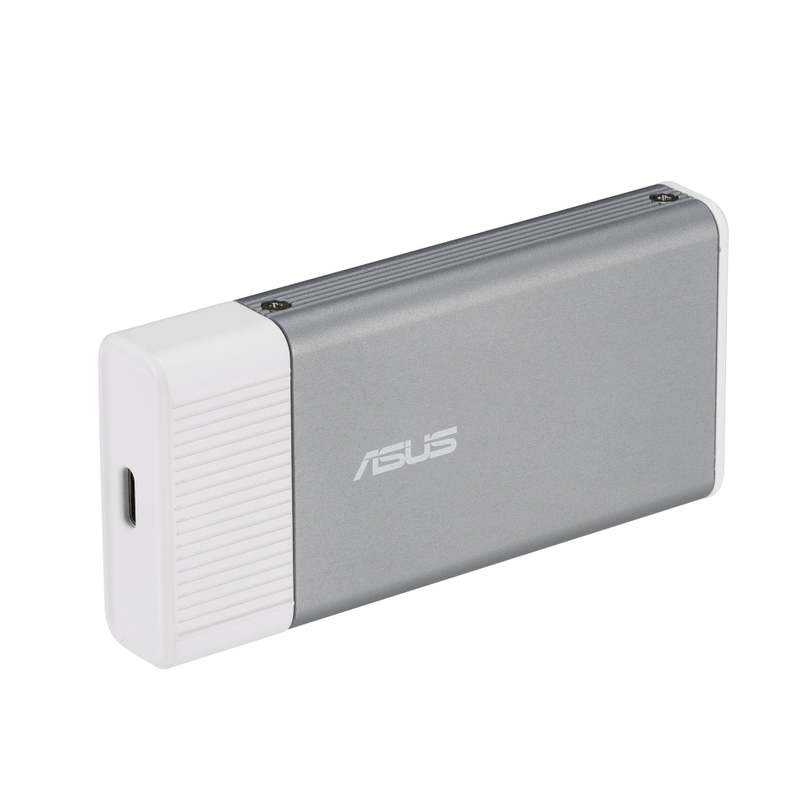
ASUS JAPAN has announced three models in the "ASUS UGen300" series of edge AI accelerators, which support both traditional vision AI and generative AI, along with one cost-focused "ASUS UGen200" model. Sales will begin on October 16th, with the lineup including "S-UGEN300-8GLD4-TC," "UGEN300-8GLD4-M2," "UGEN300-2GLD4X-M2," and "UGen200-640KSR-M2." Prices are 49,800 yen for the S-UGEN300-8GLD4-TC, 45,980 yen for the UGEN300-8GLD4-M2, 29,980 yen for the UGEN300-2GLD4X-M2, and 24,980 yen for the UGen200-640KSR-M2. This product family offers both USB and M.2 connection models, designed for a wide range of deployments from existing PCs to embedded devices.
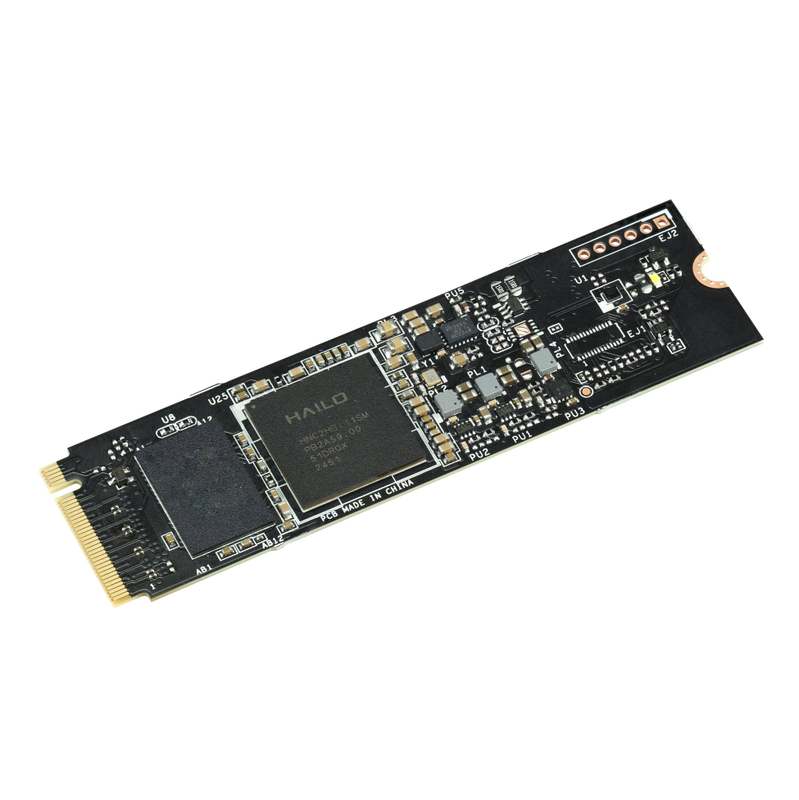
ASUS UGen300 M2 AI Module 8GB LPDDR4
The flagship UGen300 series is equipped with the Hailo-10H chipset. It features a typical power consumption of just 2.5W and delivers inference performance of up to 40 TOPS (INT4). By combining it with dedicated LPDDR4/4X memory, it can process generative AI workloads such as LLM, VLM, and Whisper-based speech recognition in a local environment. This makes it easy to utilize in applications where cloud dependency needs to be reduced or in scenarios requiring low latency.
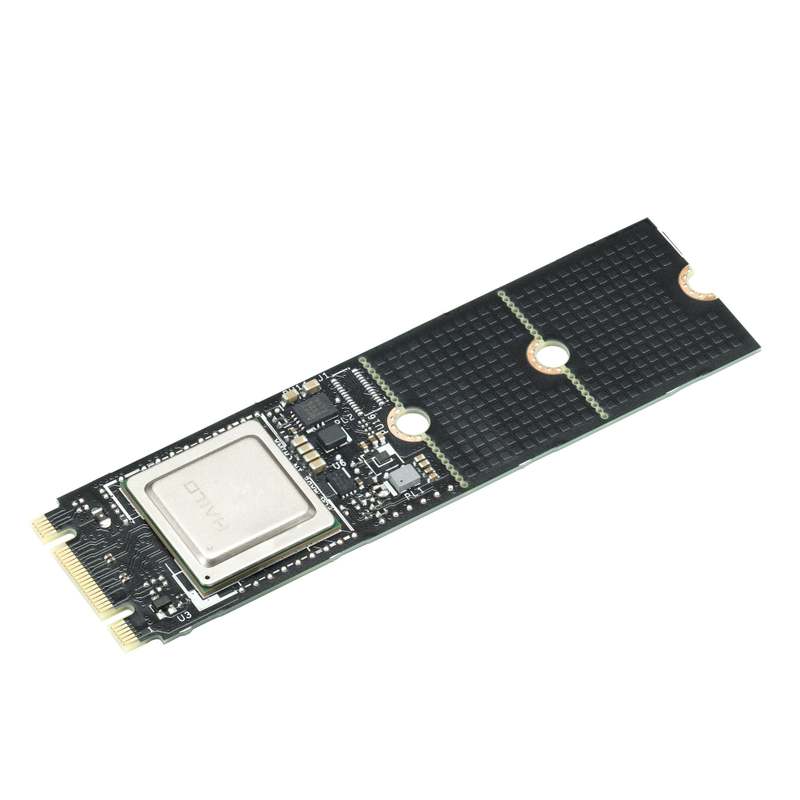
ASUS UGen200 M2(B+M) AI Module
The form factor options are also clear. The UGen300 USB AI Accelerator features a plug-and-play design with USB 3.2 Gen 2 Type-C connectivity, allowing AI capabilities to be expanded simply by plugging it into a laptop or small PC. The UGen300 M2 AI Module and UGen200 M2 are internal modules compatible with M.2 2280 slots, suitable for cable-free, space-saving implementations. The UGen200, equipped with Hailo-8L, supports up to 13 TOPS (INT8) and is suitable for scenarios where traditional vision AI applications like object detection, image classification, and human tracking need to be implemented at a low cost.
It also boasts broad compatibility. In addition to Windows, Linux, and Android (for B2B), it supports both x86 and ARM architectures. Furthermore, with over 150 pre-trained models and sample codes provided via UGen Utility and GitHub, users can easily proceed with PoC (Proof of Concept) and development verification immediately after purchase. This new product lineup is highly noteworthy for companies looking to establish an AI infrastructure that operates entirely on the edge, from image recognition to generative AI.