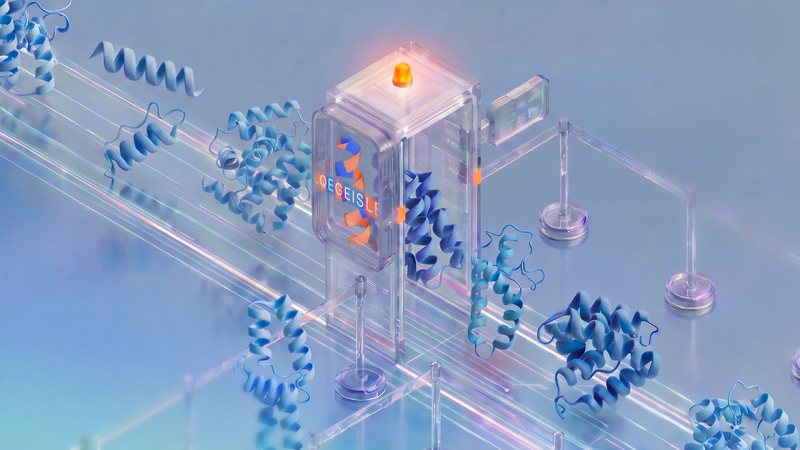
On September 30, Google DeepMind announced "SynthID Bio," a method for embedding identifiable watermarks into AI-designed proteins and similar structures. This technology reportedly allows verification of AI origin even from physically synthesized proteins.
The mechanism involves slightly adjusting the selection of amino acids that constitute a protein and embedding a detectable signal into the sequence. In experiments, proteins targeting VEGF-A, SARS-CoV-2 spike protein, and PD-L1 were created, and it was confirmed that their binding performance and biological functions were maintained even with the watermark embedded.
The background for this development is that generative AI has enabled the design of biological sequences entirely different from conventional ones. With SynthID Bio, DNA synthesis providers and others can use it as a clue to verify whether a sequence was "generated by a trusted AI model."
The company is also advancing its application to genomes. They embedded a watermark into the genome of a bacteriophage designed using Evo 2 and confirmed its functionality in the laboratory. This marks SynthID's expansion from distinguishing AI-generated content in the digital world into the realm of life sciences.