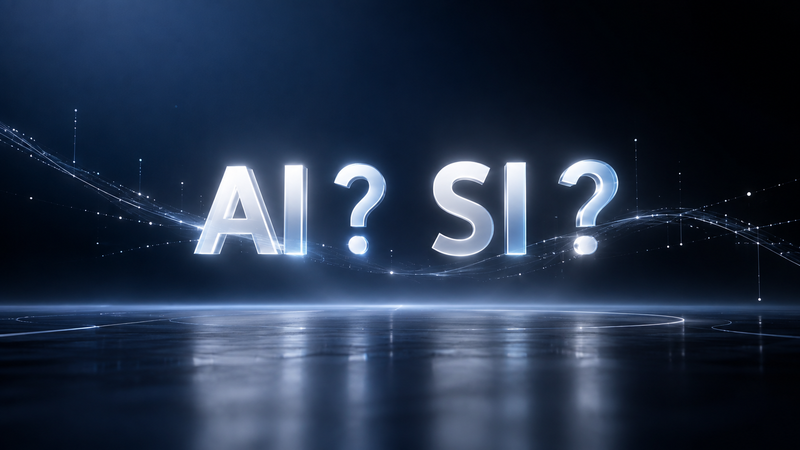
The U.S. White House announced on September 25 that President Trump and Chinese President Xi Jinping have agreed to use the term "Super Intelligence (SI)" instead of "Artificial Intelligence (AI)." The two countries will establish a "U.S.-China SI Dialogue" to discuss the risks and benefits.
Trump had expressed his intention to henceforth refer to AI as "Super Intelligence" at the UN General Assembly on September 22. This is not about a new technological stage, but rather a renaming of what has previously been called AI to SI.
However, China's official announcements continue to use "人工智能" (Artificial Intelligence). On September 26, China's Ministry of Foreign Affairs merely stated that it "respects" the U.S. terminology.
What makes it even more confusing is the distinction from "ASI." ASI, an abbreviation for "Artificial Superintelligence," refers to future AI that significantly surpasses human intelligence. Concerns that it could threaten human existence have fueled discussions calling for a slowdown in AI development and safety measures. However, the current SI is not an abbreviation for ASI.
While translating it as "超知能" (Super Intelligence) in Japanese can easily lead to confusion with ASI, this SI is a different concept. For the time being, it is reasonable to understand it as a unique term introduced by the Trump administration to replace AI.