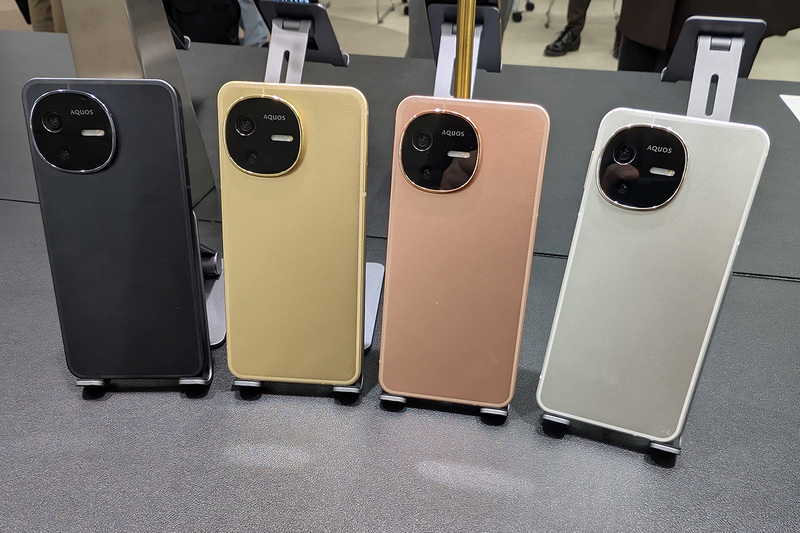
This series provides a weekly summary of developments in budget SIMs, SIM-free smartphones, and more, along with a price list of major budget SIM providers. Last week's hot topic was Sharp's "AQUOS sense11." A classic in the mid-range, its product price has now climbed into the ¥90,000 range due to rising semiconductor costs. In return, it seems to be pursuing a premium feel in its design and camera.
SIM-Free Version Hits Mid-¥90,000 Price Point, But Lightweight Design and Enhanced Camera Image Processing Are Excellent – A Device Built to Last
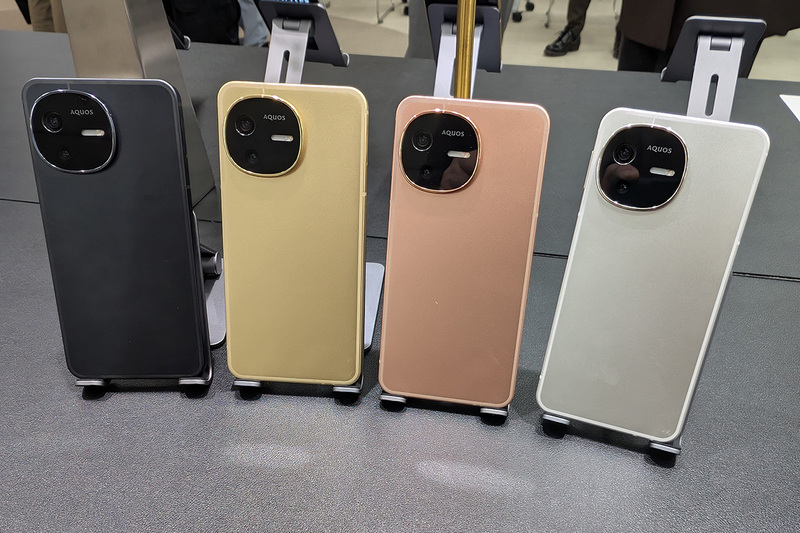
A new model of Sharp's "AQUOS sense," a staple in the mid-range, has been released. It will be available on November 26. The SIM-free version is priced at ¥94,600 for the 8GB+128GB model and ¥119,900 for the 12GB+256GB model.
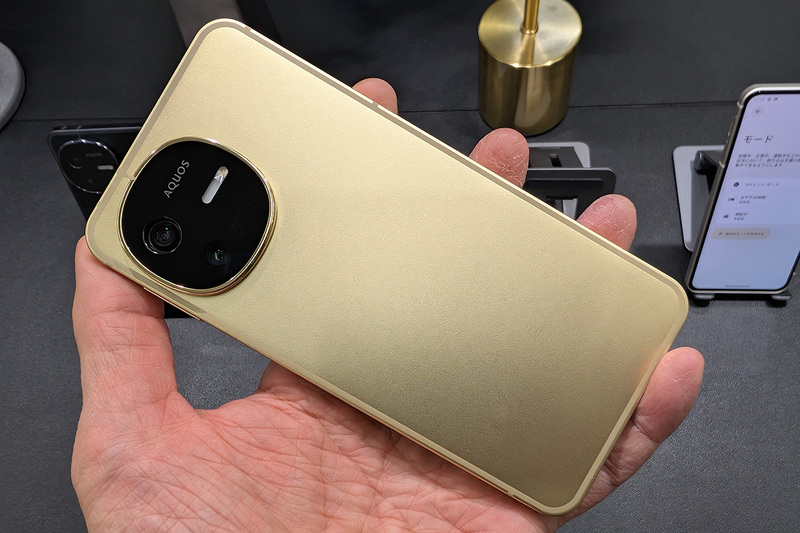
The gold model is simple yet strikingly beautiful.
For product details, please refer to a separate article (Sharp's "AQUOS sense11": Its greatest strength is its reliability for long-term use, introduced in a hands-on photo report!). The biggest evolution is its thinner and lighter design. While the previous model (AQUOS sense10) was also notably light, this aspect has been further refined (approx. 8.9mm → approx. 7.6mm, approx. 166g → approx. 157g).
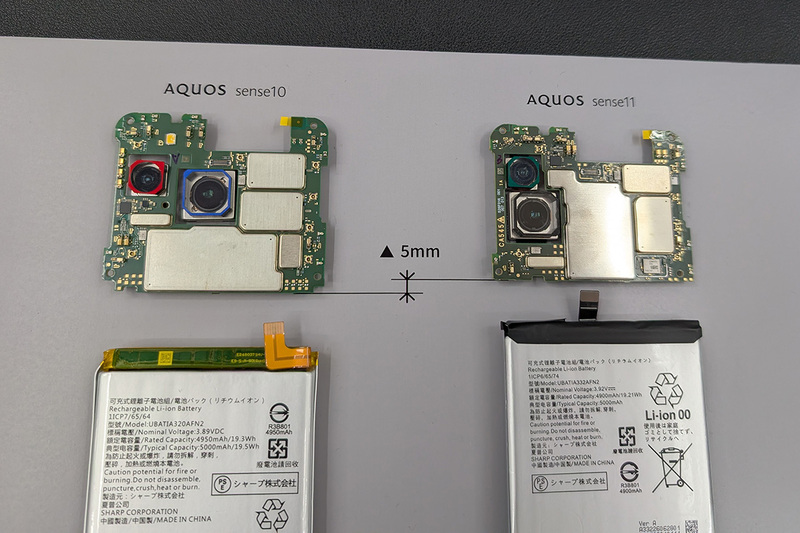
A weight reduction of approximately 9g was achieved through a series of minor improvements, such as miniaturizing the circuit board.
Behind this lies a series of small improvements, with the miniaturization of the circuit board being particularly significant. This allowed for a thinner battery pack while maintaining the same 5000mAh capacity as the previous model. Of course, durability has not been sacrificed (in fact, water and dust resistance has been upgraded to IP69).
Another major point is the camera. The dual-camera setup remains the same, featuring a 1/1.55-inch 50.3-megapixel standard lens plus an equally 50.3-megapixel wide-angle lens. However, it aims to move away from "smartphone-like" photos by, for example, intentionally retaining noise where appropriate, to create a more refined image. Furthermore, continuous shooting has seen significant improvement, evolving from a maximum of 3 frames in the previous model to 10 frames, thanks to optimized processing.
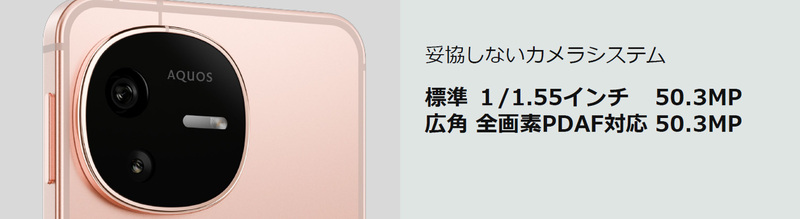
Hardware specifications themselves are the same as the previous model.

Image processing shifts from a "smartphone-like" aesthetic to a more "camera-like" one, boasting image quality that surpasses its class.
Key specifications include a 6.2-inch Pro IGZO OLED (1080×2340, 1-240Hz variable refresh rate), Snapdragon 7s Gen 3, 8GB+128GB or 12GB+256GB, 50.3-megapixel (1/1.55-inch) + wide-angle 50.3-megapixel camera, 5000mAh battery, microSD support, FeliCa, side-mounted fingerprint sensor + face authentication (mask compatible), Android 17, and more. The SoC remains the same as the previous model.
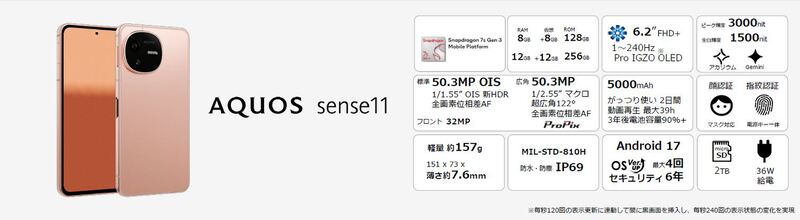
Here are the main specs. The SoC is the same as the previous model. OS updates are guaranteed up to 4 times, and security updates for 6 years.
While the rapid surge in semiconductor prices has pushed it into a price range that's a bit tough to call "mid-range," it emphasizes its long-term usability, such as providing 6 years of security updates. It certainly remains a smartphone that's easy to recommend to a wide range of users.
INFOBAR Revived! A Call & SMS-Only Device That Pairs Well with Budget SIMs!?
The "INFOBAR," synonymous with au's designer phones, has been revived! It will be released on December 25. The hardware is manufactured by CPSpeed, and it's priced at ¥32,780.
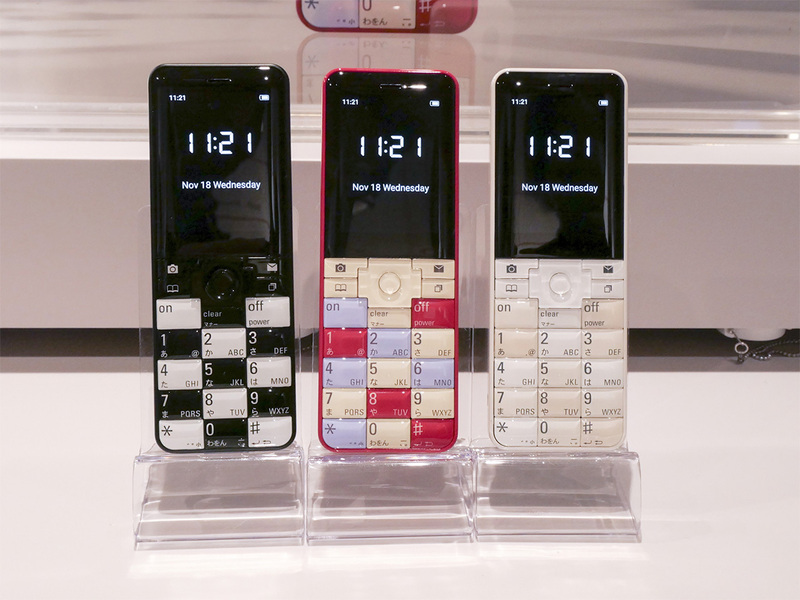
Color variations include "ICHIMATSU," "NISHIKIGOI," and the new color "SUNANEKO."
This new INFOBAR, featuring the beautiful, familiar NISHIKIGOI color, pursues simplicity in its functionality, being dedicated to calls and SMS (it does include a 2-megapixel camera, reportedly to evoke a retro feel. FeliCa and waterproofing are not supported). It might also be convenient for those seeking a digital detox.
Although it's a model sold by au, it's clearly stated as SIM-free on the product information page. Naturally, it supports VoLTE, and its 4G compatible bands include 1/2/3/8/18/19/26/41, also supporting Docomo/SoftBank's platinum bands. While "operation with other company's SIM cards is not guaranteed," it is highly likely to work on other carriers' networks (SIM is nanoSIM/eSIM).
Given that budget SIMs can offer "all-you-can-call" plans for under ¥2,000 per month (for details, please refer to the following article → "For those who still make a lot of calls! A summary of budget SIMs that offer 'all-you-can-call' for under ¥2,000 per month." With povo2.0, an all-you-can-call option costs ¥1,650, which might be the most reliable option), the new INFOBAR seems to have good compatibility with budget SIMs. It's certainly a product to watch.