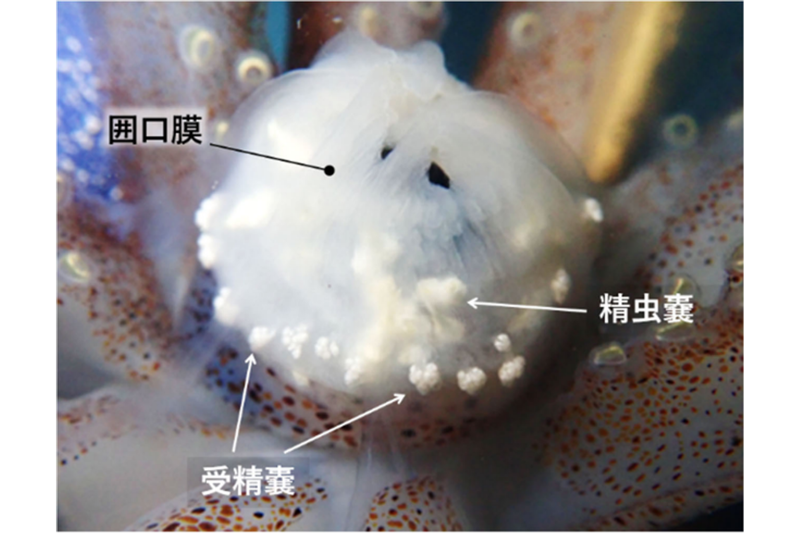
Hokkaido University announced on November 6th that when observing live female Japanese flying squid underwater, they found a soft membrane surrounding the mouth was closed like a bud. This narrow space created by the membrane may prevent sperm from being easily washed away by seawater after copulation. The paper was published on September 11th in the academic journal 'Marine Biology'.
Japanese flying squid sperm are released from sacs located around the female's mouth and then move to an organ that stores sperm until spawning. Previously, research primarily focused on deceased individuals, making it difficult to understand the shape of this soft membrane in living squid. In live individuals, the membrane enveloped the mouth, bringing the sperm-releasing sacs and the storage organ closer together.
Folds inside the membrane contained a transparent, viscous layer rich in sperm, which was not easily washed away even with gentle water movement. The research team believes that both the narrow space and the viscous layer contribute to retaining the sperm.