
Apple has announced the MacBook Pro, equipped with a touch-enabled OLED panel and dubbed the "PROLED XDR Display." Pre-orders have already begun, with a release date of Friday, November 6. The 14-inch model starts from ¥499,800, and the 16-inch model from ¥599,800.
Touch-Enabled MacBook Finally Here! It's Sure to Be Embraced by the Smartphone Generation and Beyond!
The MacBook Pro has finally arrived, featuring a display that covers almost the entire device when opened, and it's incredibly beautiful. While there have long been questions about whether touch operation is necessary on a notebook Mac screen, it will likely be well-received by age groups who consider "if you see a screen, you should be able to touch it" as a given (though it might be a bit pricey for younger generations to purchase).
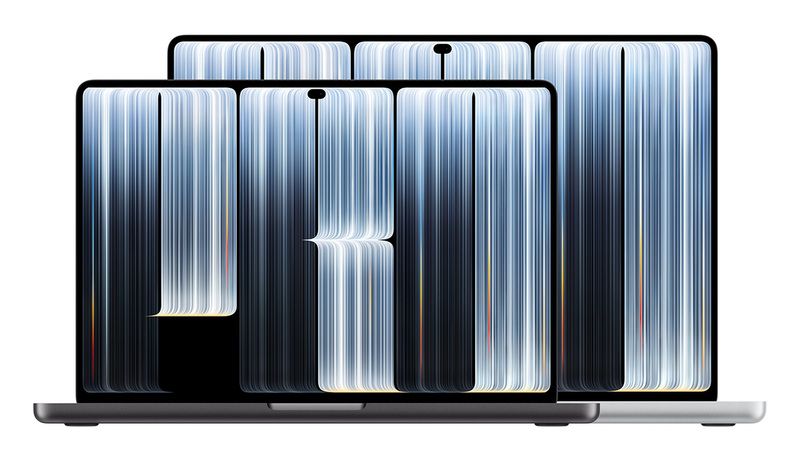
Significant weight reduction in both 14-inch and 16-inch models is also a key highlight.
Tandem OLED Adoption Delivers Overwhelming Contrast Ratio, Color Gamut, and Resolution; Hinges Also Strengthened for Touch Support
The display utilizes an Organic EL (OLED) panel named "PROLED XDR Display." This is a tandem OLED panel, which, like those already adopted in the iPad Pro, features multiple stacked emissive layers. This design achieves an overwhelmingly wide color gamut and a strong sense of resolution.
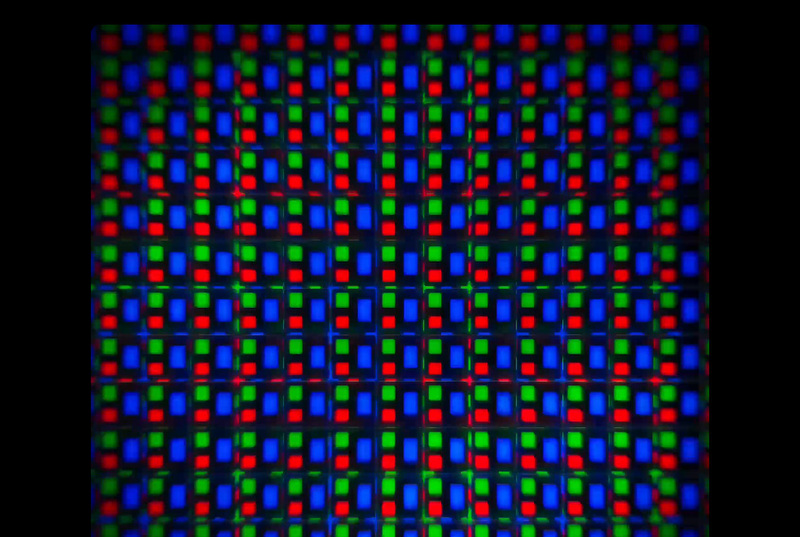
Adopting tandem OLED with multiple stacked emissive layers. This also prevents color bleeding around fine details and text, a weakness of conventional OLEDs.
The system resolution is 3024×1986, with a contrast ratio of 10,000,000:1. Maximum brightness is 1000 nits for full-screen content, with a peak brightness of 2000 nits for HDR content and outdoor use. The color gamut supports P3 + Adobe RGB. Furthermore, ProMotion technology with a variable refresh rate of 10-120Hz is adopted.
And then there's touch support. Apple explains that it was specially designed for Mac, emphasizing its excellent responsiveness. Beyond everyday use like scrolling web browsers or pinch-to-zoom gestures for photos and maps, it can also be utilized for creative work. This includes operating graphics and music applications, and software developers will now be able to directly test iOS/iPadOS apps.
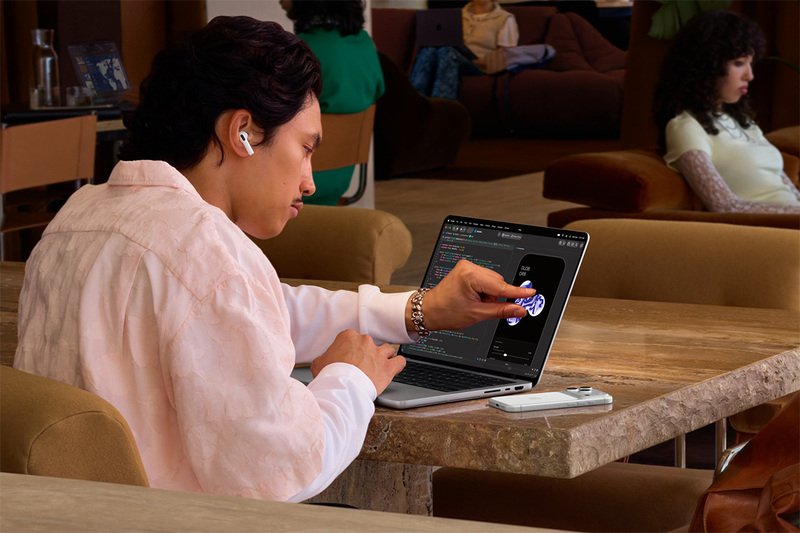
Directly test operations when developing iPhone apps on a Mac.
Additionally, the hinges have been reinforced for improved stability during touch operations. Even when performing touch gestures during a video call, the display remains smooth thanks to advanced image stabilization.
While apps developed for Mac can generally be operated via touch as they are, software developers can also create apps optimized for touch operation. Examples of already optimized apps mentioned in the press release include Notion, Canva, Zoom, Word, Excel, PowerPoint, Outlook, Adobe Lightroom, DaVinci Resolve, Blender, Maxon Cinema 4D, Maxon ZBrush, Shapr3D, and Algoriddim djay Pro.
Dynamic Island Also Comes to Mac; Display Bezels Become Extremely Thin; Significant Weight Reduction, 14-inch Now 1.38kg!
Another key feature of the display is the "Dynamic Island," making its debut on Mac. While the camera notch on recent MacBooks was quite large and a point of contention, the Dynamic Island significantly miniaturizes it. Similar to the iPhone, it will be fully utilized as an area for Siri AI, music playback, and notifications, including pop-out animations.
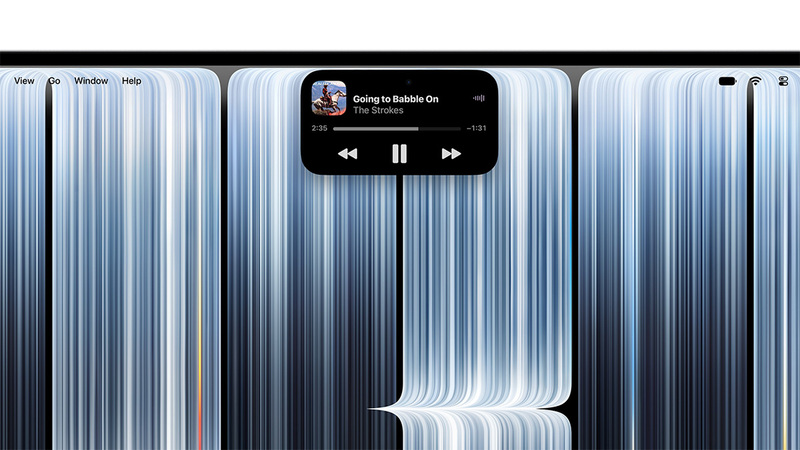
Dynamic Island also comes to Mac.
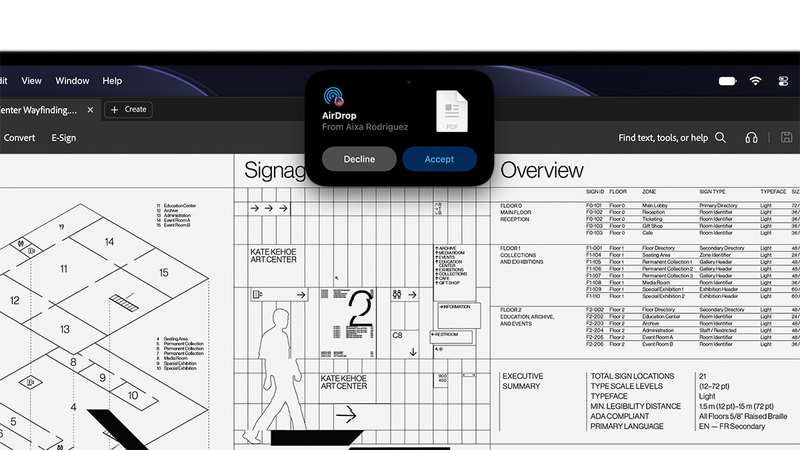
Used for notifications and more, just like on the iPhone.
A benefit of the Dynamic Island is also the slimming down of the display bezels. As a result, the 14-inch model's screen size remains 14.2 inches, while the 16-inch model slightly expands from 16.2 inches to 16.3 inches. Meanwhile, the body weight has been significantly reduced: the 14-inch model drops from the previous 1.6kg to 1.38kg, and the 16-inch model from 2.14kg to 1.82kg. Despite this, battery life remains the same as previous models, at up to 14 hours and up to 17 hours respectively (both for M5 Pro models). For the 14-inch model, it can now be said to have entered the realm of fully capable mobile operation.
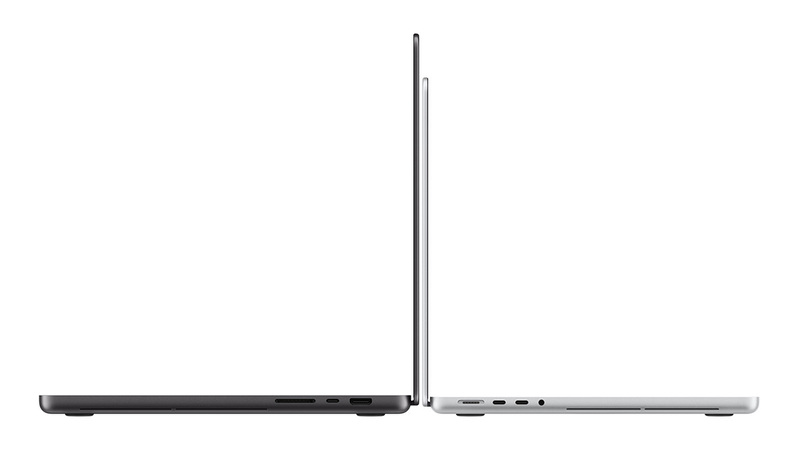
The thinner and lighter design is also a major appeal of the new MacBook Pro.
The standard models, priced at ¥499,800 for the 14-inch and ¥599,800 for the 16-inch, come with an M5 Pro, 24GB of memory, and 1TB of storage. The M5 Pro can be configured with up to 48GB of memory, while the M5 Max offers up to 128GB. Storage options for the M5 Max go up to 16TB (M5 Pro up to 4TB). Nano-texture glass is also available as an option, adding ¥27,000.
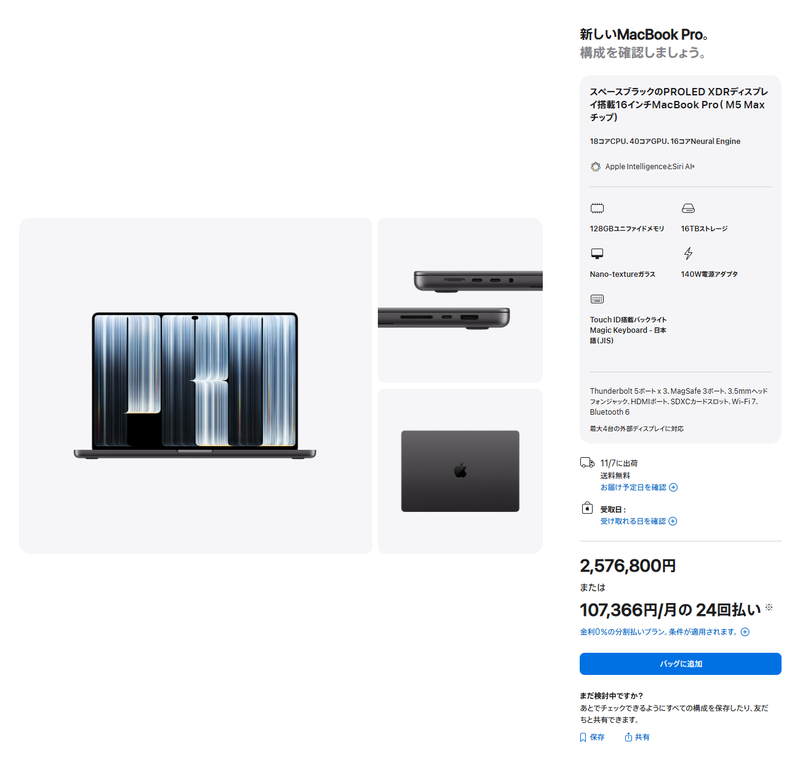
The price for a fully specced 16-inch model with 128GB memory, 16TB SSD, Nano-texture glass, and more, is ¥2,576,800. At this point, it's hard to tell if that's expensive or cheap.