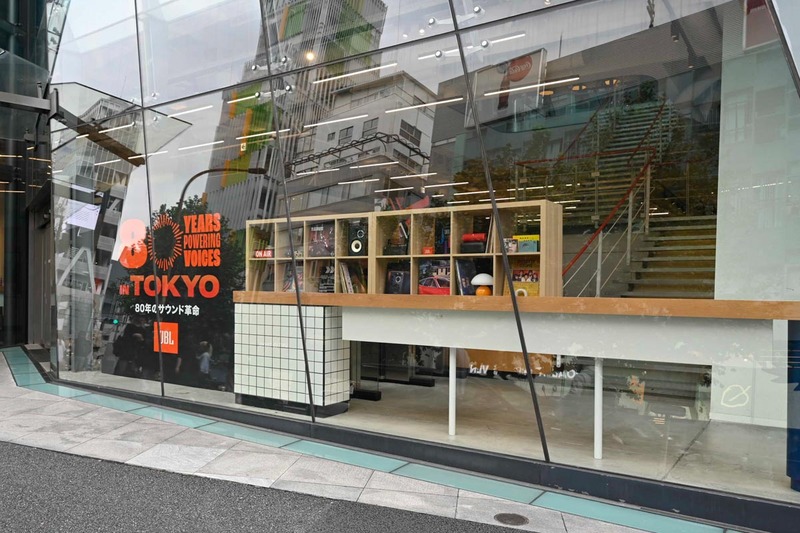
Harman International will hold "JBL 80 YEARS POWERING VOICES in TOKYO," a pop-up event commemorating JBL's 80th brand anniversary, for two days on October 3rd and 4th at WeWork Iceberg in Harajuku, Tokyo.
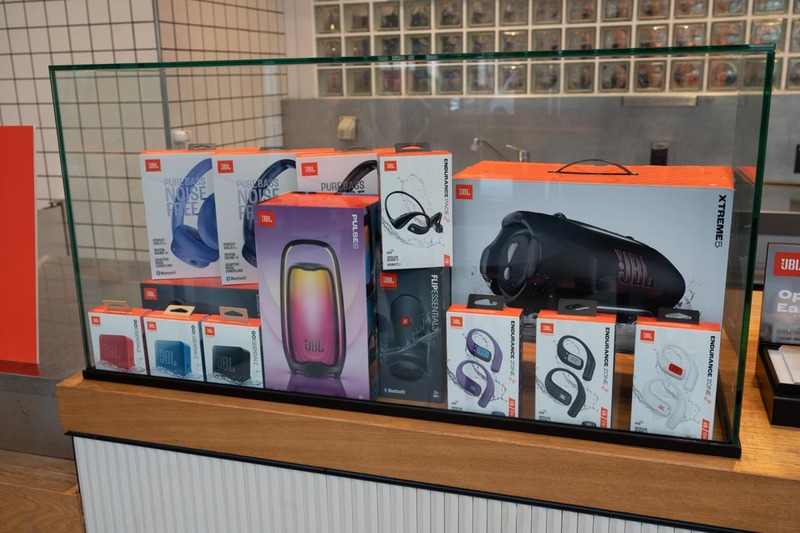
This event has toured the world, starting in Los Angeles, then Amsterdam, Vienna, and Munich, with Seoul, South Korea, confirmed as the next stop after Tokyo. Admission is free. The event hours are 11:00 AM to 8:00 PM on October 3rd, and 10:00 AM to 5:00 PM on October 4th. The venue will feature a "Playback Gallery" showcasing past products, a listening area where visitors can enjoy their own records and CDs, personal listening rooms to try out headphones and portable speakers, and a vehicle display where attendees can experience JBL car audio.
An Event Tracing JBL's 80 Years Through Sound
A media preview was held on October 2nd, where a wide range of products were unveiled, from archival speakers symbolizing JBL's 80-year history to the new, pre-release wireless home audio system, "JBL COVE."
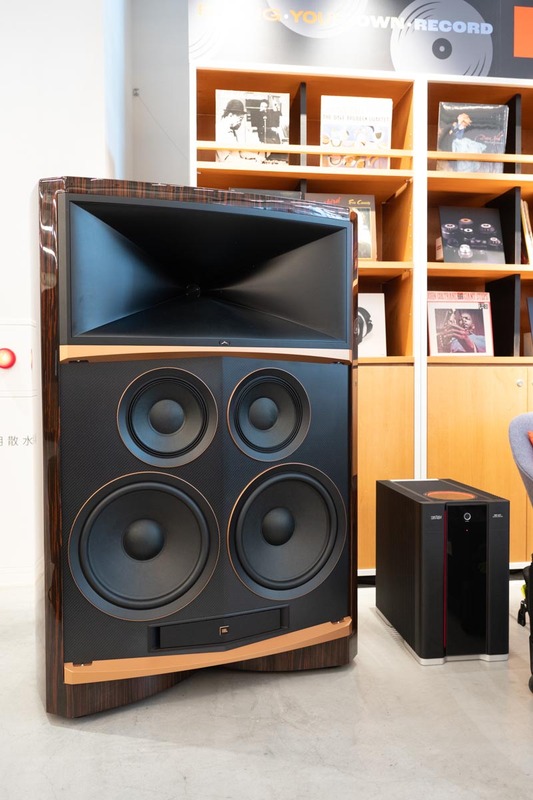
Summit Everest
One of the central features of the event is the "Live Listening Session."
Guest curators will play selected records on JBL's latest flagship speaker, the "Summit Everest." This session is designed not just for listening to music, but also for enjoying the stories behind the songs and the reasons for their selection.
At the press preview held the day before the event, Akira Yamanaka, manager and record buyer at Disk Union Shinjuku Rock Record Store, appeared as a guest. While playing his own records, he described the "Summit Everest" as having "voluminous sound," and was particularly impressed by the resonance of the vocals.
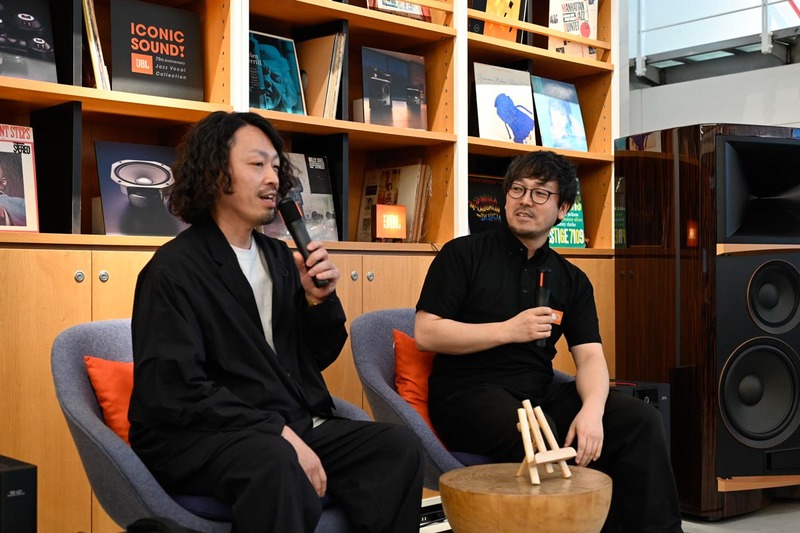
According to a JBL representative, eight curators will participate in the Live Listening Session. Each will bring their favorite records to share their musical encounters and memories. Yamanaka-san, also known as the author of "Soviet Funk: Communist Groove Disc Guide," is expected to bring and play not only classic rock albums but also "ribs records" from the former Soviet era.
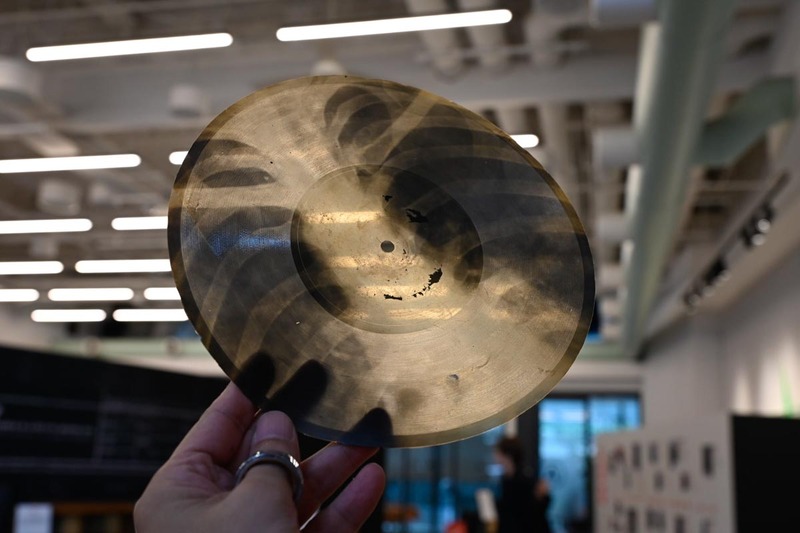
Ribs records from the former Soviet era, which were distributed with grooves etched onto X-ray films.
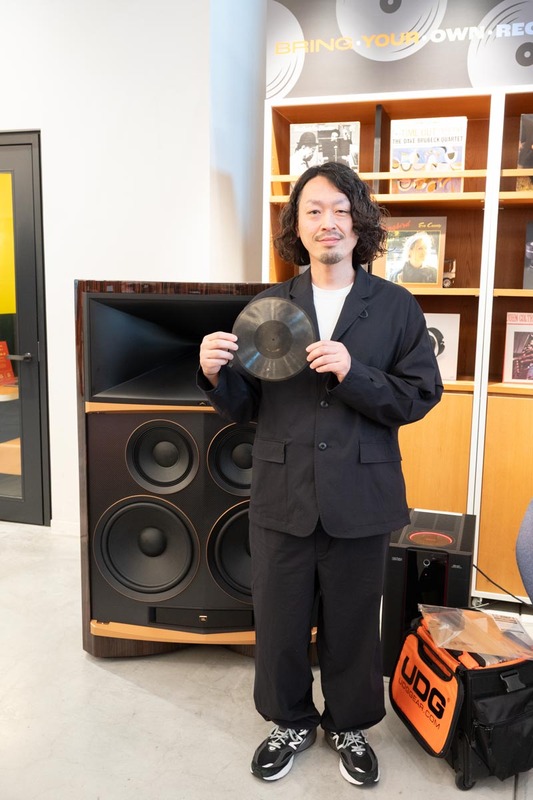
The venue will also host a "Bring Your Own Record (BYOR)" event, allowing visitors to bring their "cherished record" and listen to it in JBL's ultimate audio environment. The "Summit Everest," which recently arrived in Japan, is a massive speaker, and there are very few places in the country where one can experience it. This is sure to be an attractive feature for music and audio enthusiasts alike.
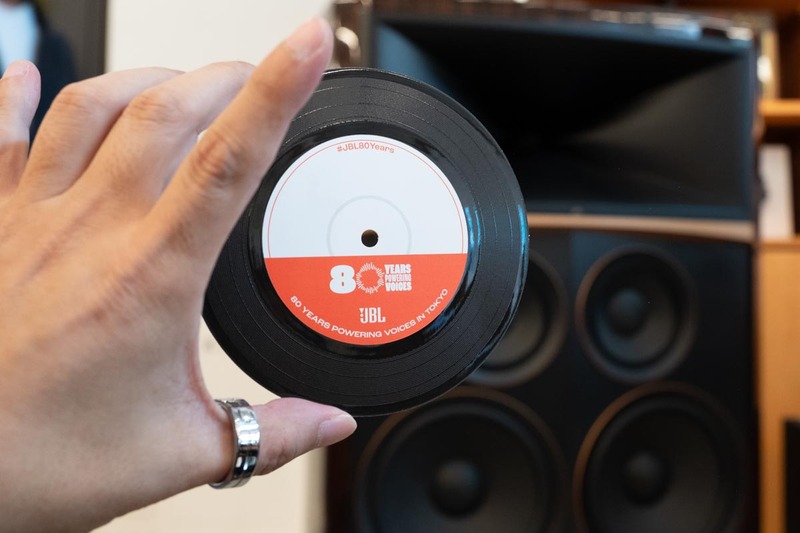
Additionally, there will be an activity where visitors can write "a song they want to leave for 80 years from now" on a record-shaped coaster and display it in the venue. Handing in a coaster with your favorite song will also get you a complimentary coffee.
From JBL's Origins to the Present — Exhibition of Legendary Models
Another highlight of the exhibition is the Playback Gallery, which traces JBL's history from its predecessor (Lansing Manufacturing, established in 1927) to the present day. Visitors can see rare actual units of past products.
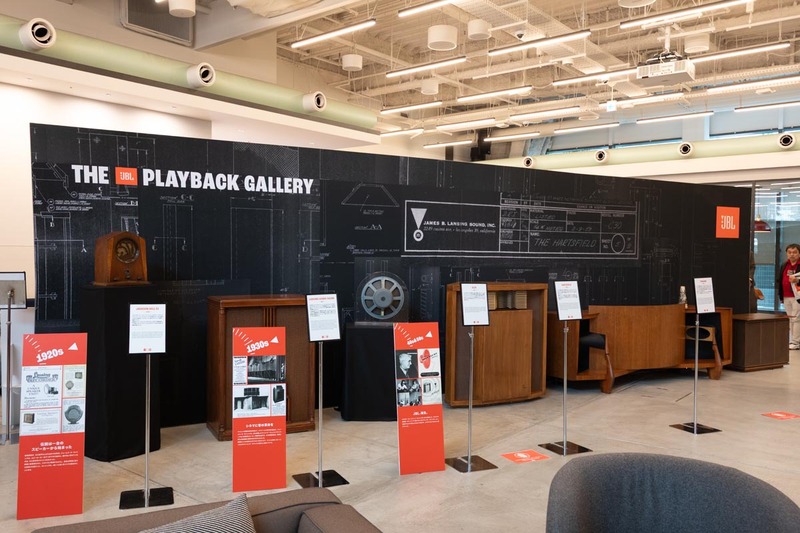
JBL's history officially begins with its founding on October 1, 1946, but founder James B. Lansing had been developing speaker drivers for radios in Los Angeles since the late 1920s, and in the 1930s, he developed a 15-inch field coil driver. This became one of the technological origins that led to the later JBL.
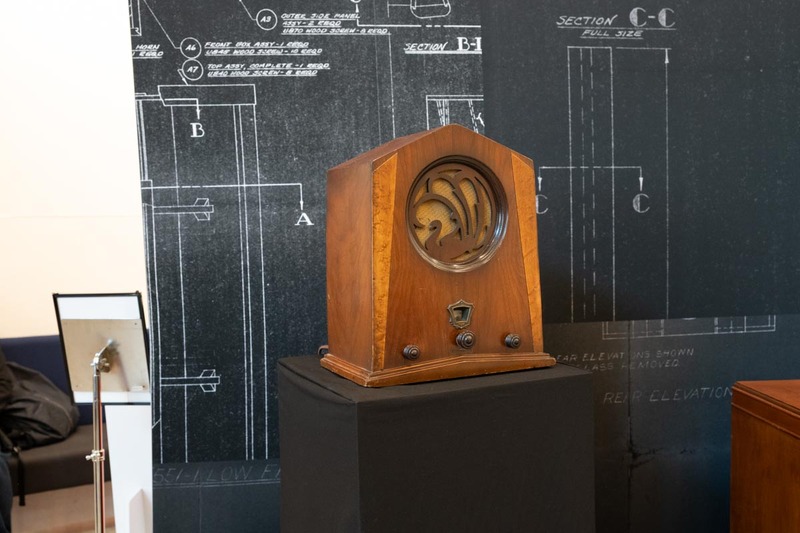
Jackson-Bell 63 (1923)
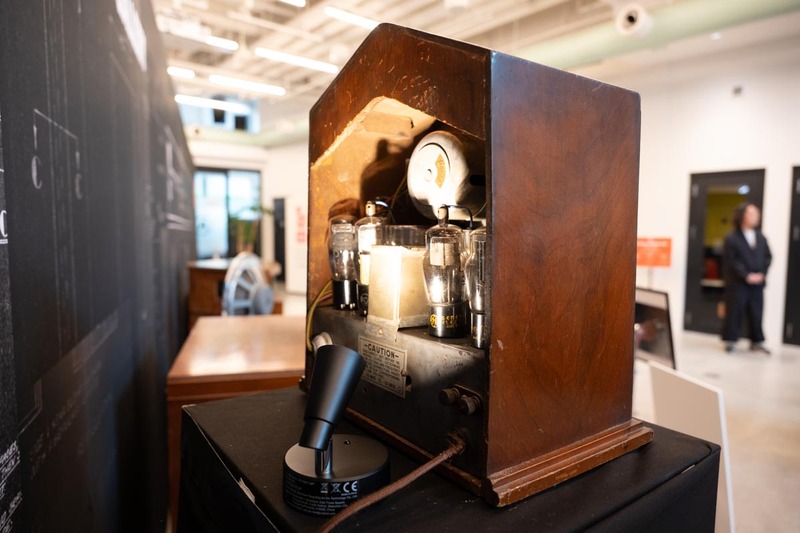
In 1934, MGM Studios in Hollywood commissioned the development of a two-way speaker for movie theaters, and in 1936, a system incorporating the "Shearer Horn" was completed. This system, which separated low and high frequencies in a two-way design, unlike traditional full-range systems, reportedly spread throughout American movie theaters.
As large cinema speakers evolved into smaller studio models, the "Lansing Iconic" was born. Furthermore, the "Iconic Salon," which applied this technology to home use with a beautiful wooden cabinet, is also on display. According to a representative, this 1937 product has only a few surviving units confirmed worldwide.
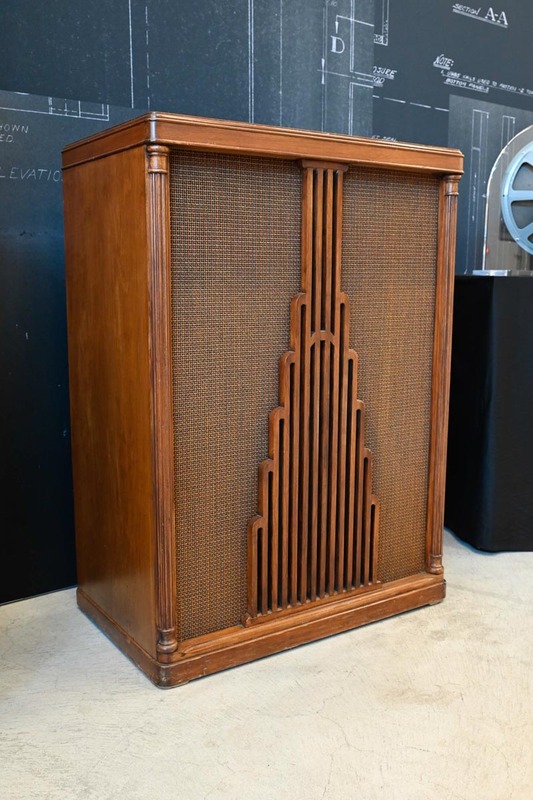
Iconic Monitor (1937). Only a small number were produced, with only 2-3 units reportedly existing worldwide.
One of the early products introduced after JBL's founding was the 15-inch "D130" driver. The D130 was used in various applications, including home speakers, guitar amplifiers, and concerts. It was also explained that Leo Fender adopted it for electric guitars in the 1950s, and it was used at the 1969 Woodstock Festival and in the Grateful Dead's "Wall of Sound."
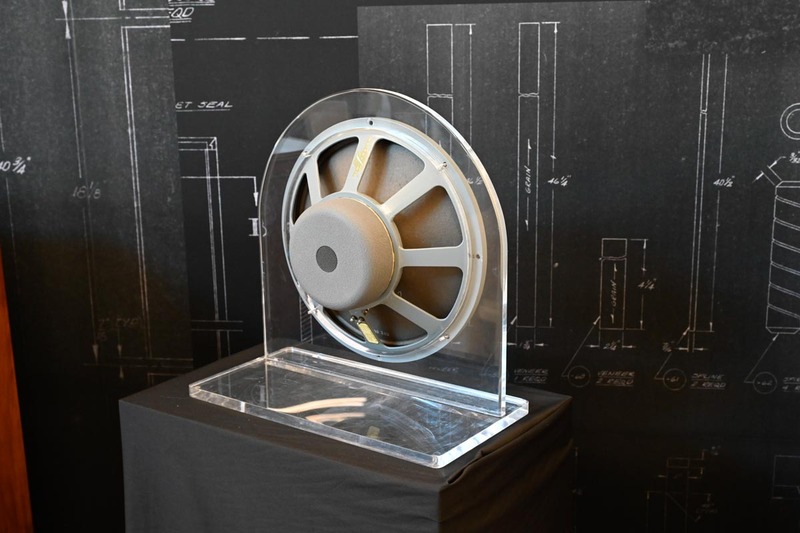
D-130 (1947)
This trend of "technology developed for professionals being extended to home use" is a crucial point in understanding JBL's history. Instead of developing professional and consumer equipment separately, the philosophy of bringing technology cultivated in professional environments into the home has been repeated for 80 years.
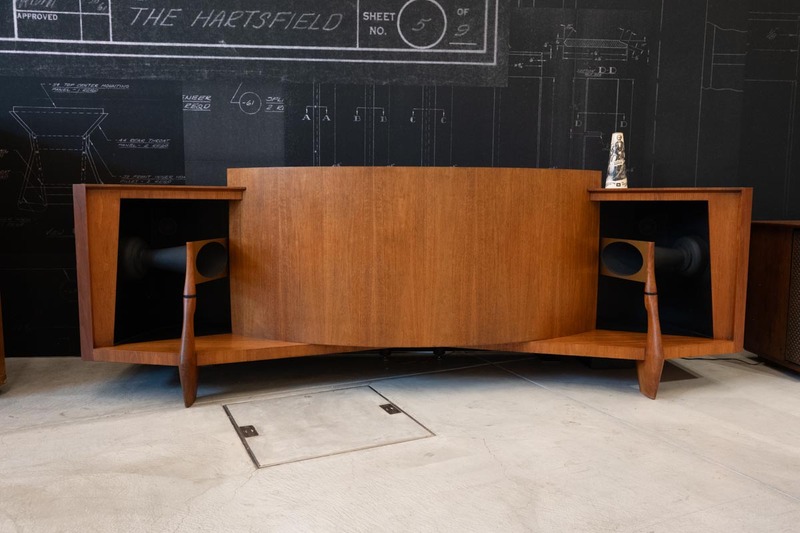
Symbolizing this approach is the "Hartsfield," introduced in 1953. At the time, stereo was not yet widespread, so it was a speaker designed for monaural playback. Its distinctive cabinet shape was intended for corner placement, utilizing the acoustic effects of the room's corners to reproduce rich sound. The Hartsfield was produced from 1954 to 1964 and reportedly found its way into the homes of prominent figures in Los Angeles. It is also known for being described by Life magazine as the "ultimate luxury speaker."
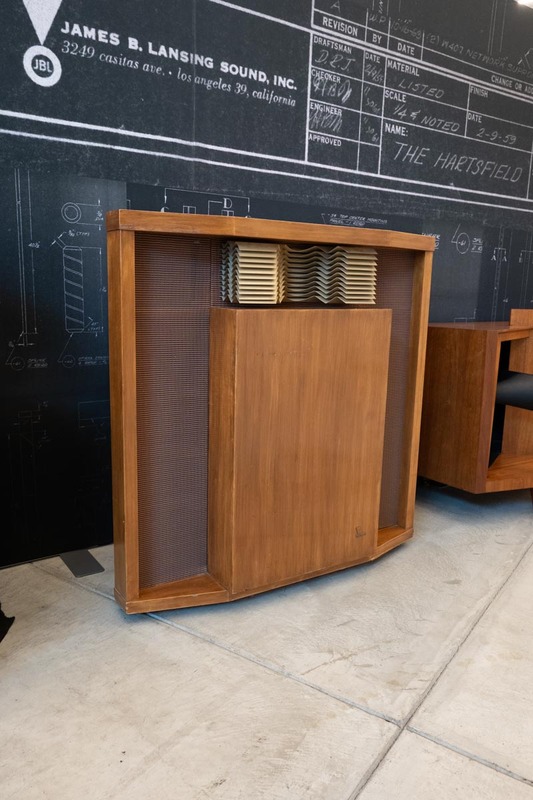
Hartsfield (1954)
As the music playback environment shifted from mono to stereo, JBL introduced new products. A prime example is the "Paragon," which appeared in 1957.
The Paragon is a representative model of JBL's early stereophonic equipment. Produced from 1957 to 1983, approximately 1,000 units were manufactured. Its original price was $2,000, which translates to about $23,000 in today's value. Each cabinet reportedly required over 100 hours of woodworking.
Early Paragon models featured one D130 driver on each side. Instead of the common method of placing left and right speakers separately, it was designed to house both left and right sound sources within a single large cabinet, creating a stereo image when listened to from the center. At the preview, a Frank Sinatra song was played from a working unit. The representative explained that by listening from the correct position, the "sweet spot" (2-3 meters in front, at the height of a low sofa), one could experience the unique stereo effect of the Paragon.
Following this, models symbolizing JBL's history are lined up, including the "Olympus" as a smaller home audio system, the "4310" widely used in recording studios, the "L100 Century" which brought that technology to home use, the large studio monitor "4350," and further models like the "D55000 Everest" and "K2 S9900."
The "4310," in particular, is a representative studio monitor used in recording studios worldwide. Quincy Jones also favored JBL studio monitors and reportedly used the successor model, the 4311, for his recordings.
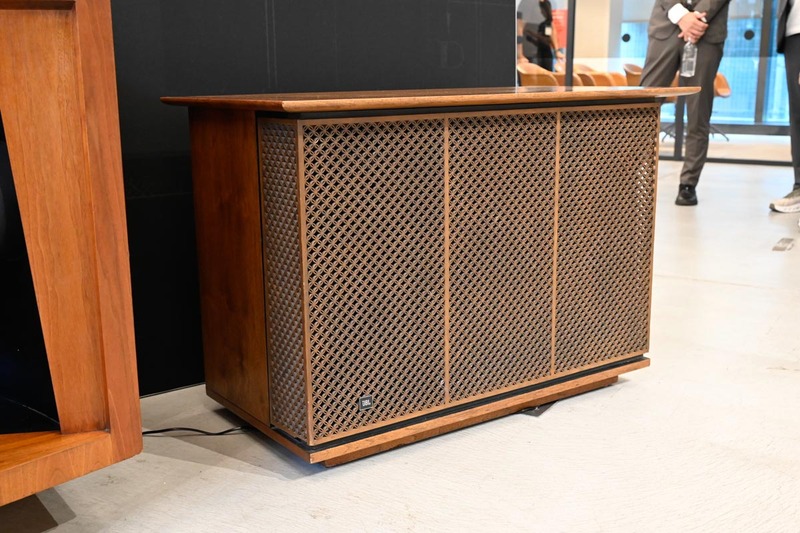
Olympus (1960)
In the 1970s, the L100 Century emerged, bringing studio monitor technology to home use. At a time when black grilles were common, JBL introduced the orange "Quadrex foam grille," creating a design that was not only an audio device but also a striking piece of furniture. At the preview, an original unit from the early 1970s was displayed in working condition. Tracing these historical models reveals that JBL's 80 years are not simply a "history of luxury speakers." It is also a history of expanding the application of technology in response to changes in the musical environment, from movie theaters, recording studios, and concerts to homes, and now to Bluetooth speakers.
New Series "JBL COVE" for the Streaming Era
Alongside these historic masterpieces, another highlight of the event is the "JBL COVE," making its debut in Japan.
JBL COVE is a wireless home audio system developed for the streaming era. It features three models: "COVE X1," "COVE P1," and "COVE M1," all of which allow users to enjoy music via Wi-Fi connection. The release is scheduled for late October 2026.
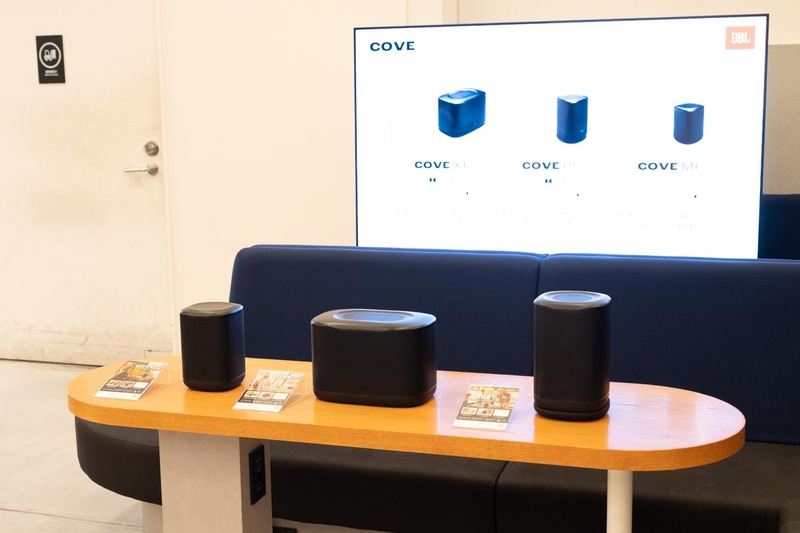
Among these, the X1 and P1 support Dolby Atmos playback. They are also equipped with 30mm diameter height speakers on top. Users can enjoy multi-room playback by controlling multiple devices simultaneously using the "JBL ONE" app.
Smartphone connectivity and streaming services available include AirPlay 2, Google Cast, Spotify Connect, and Qobuz Connect. According to the representative, when using an iPhone, Dolby Atmos Music playback is possible via AirPlay. Furthermore, Spotify Connect offers lossless playback, and using JBL ONE enables high-resolution/Dolby Atmos playback from Amazon Music.
The high-end COVE X1 model drives six speakers with a total of 200W of amplification. It supports Dolby Atmos Music and, with its configuration including height speakers, can create a three-dimensional sound field even with a single unit. The selling price on the JBL online store is 74,800 yen.
The COVE P1 is the series' only portable model, offering up to 14 hours of battery life, IP56 dust and water resistance, and support for a charging cradle. Like the X1, it supports Dolby Atmos Music and can be carried not only to the living room but also to the kitchen or terrace. Its price is 68,200 yen.
The COVE M1 is the most compact entry-level model among the three, featuring three 20mm tweeters and a 100mm woofer. Its price on the JBL online store is 35,200 yen.
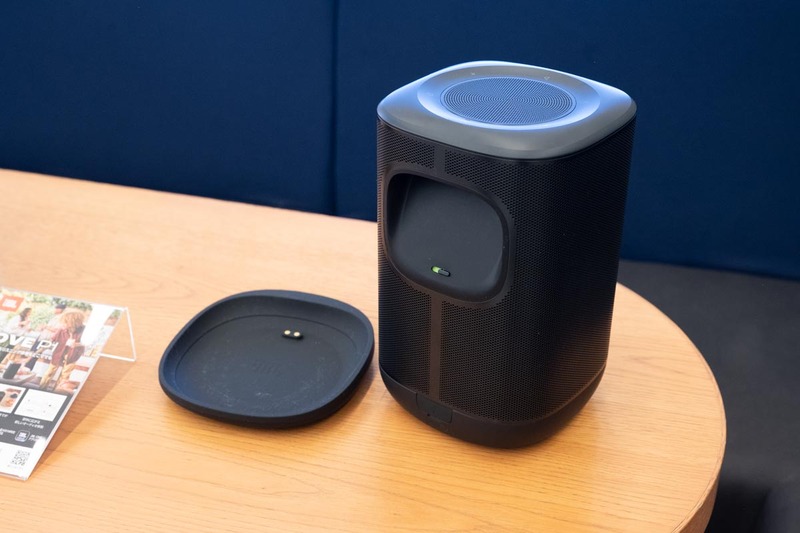
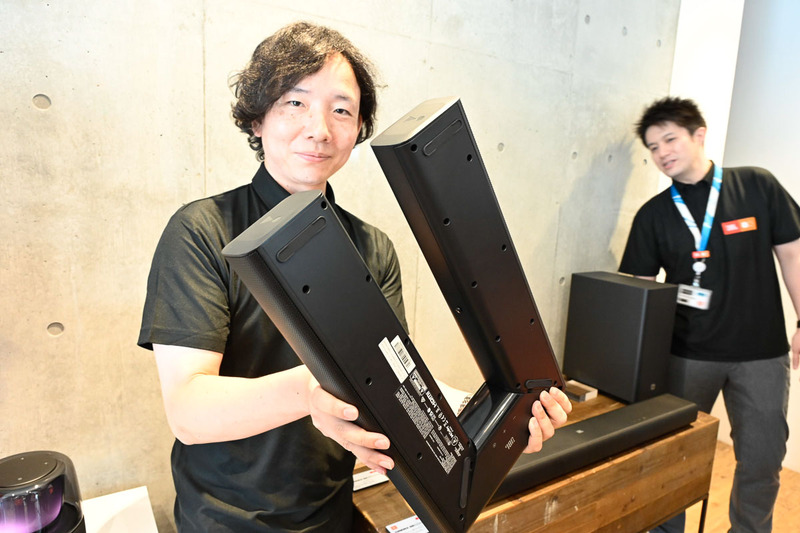
The COVE P1, which offers wireless connectivity. It can also be used as a rear speaker for soundbars.
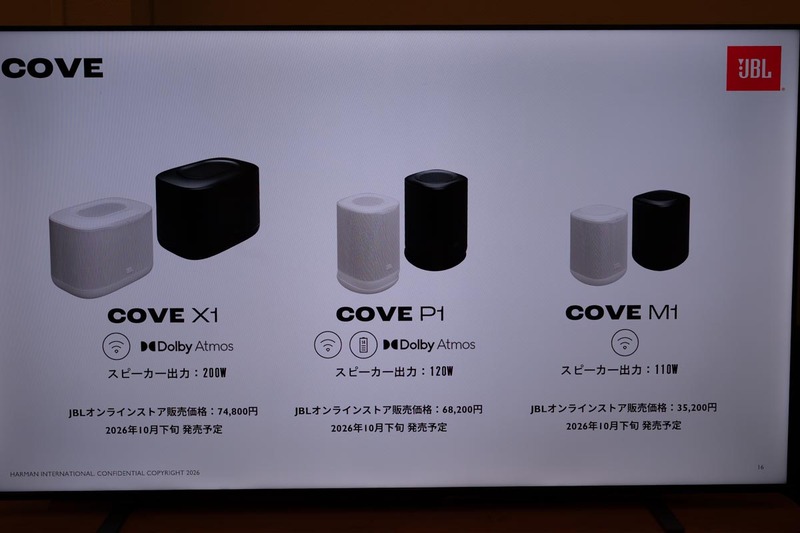
The COVE's features extend beyond standalone music listening. In addition to stereo playback with two units and multi-room playback across several rooms, it can also be paired with compatible "JBL BAR MK2" series soundbars to function as rear speakers.
At the preview, a demonstration was conducted with multiple COVE units connected. The representative showcased a feature that allows users to seamlessly continue listening to the same music when moving from the living room to another room, simply by operating the speaker. This highlights COVE's characteristic expansion of use, from a speaker for listening to music in a single room to a system that "connects music throughout the home."
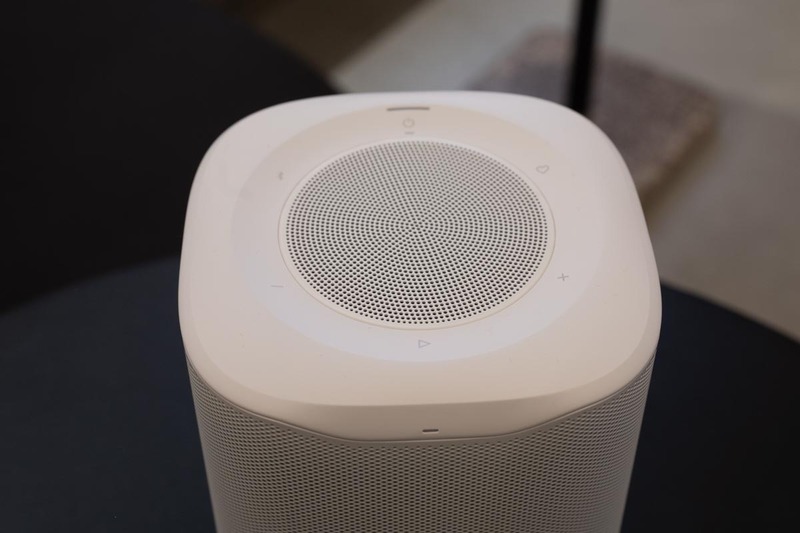
Operation is via touch panel.
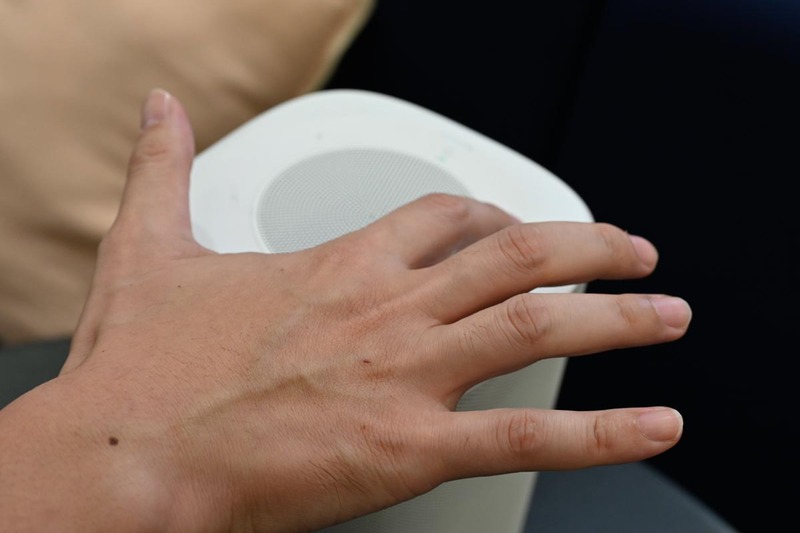
Operation is also excellent, for example, multi-room playback can be easily enabled by pressing the button at the 2 o'clock position.
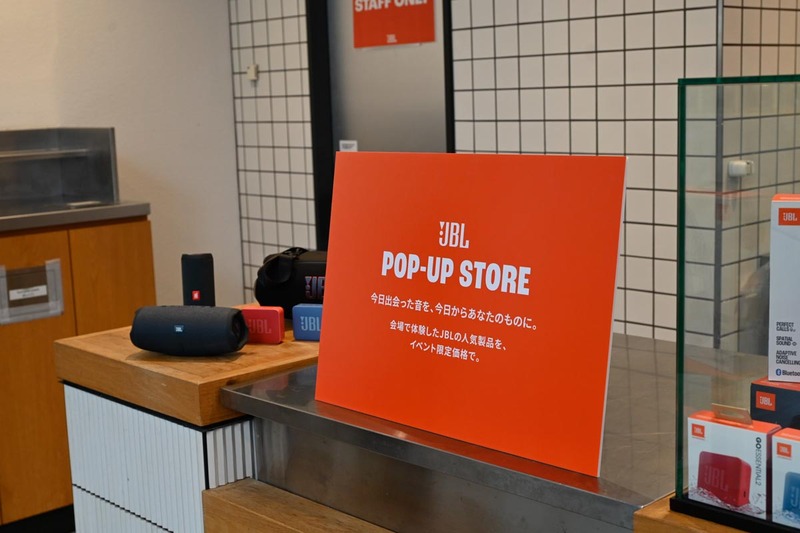
Limited edition colors, usually only available online, were also displayed at the venue and could be purchased on site.
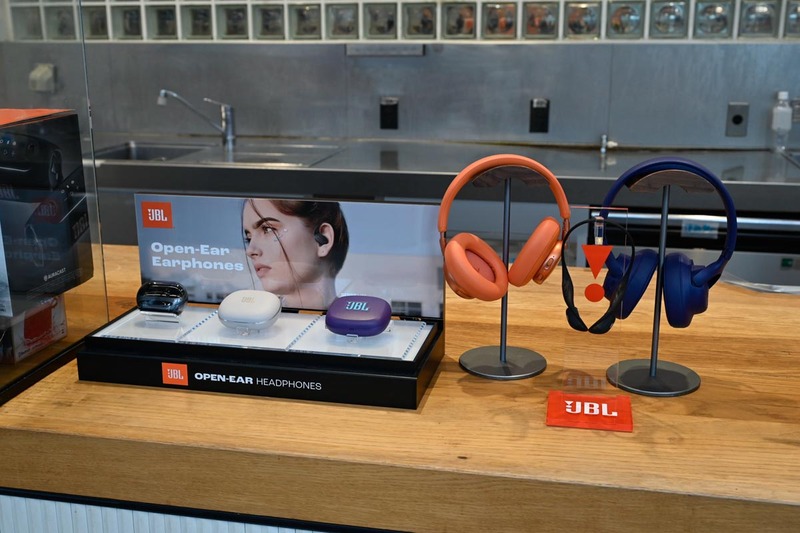
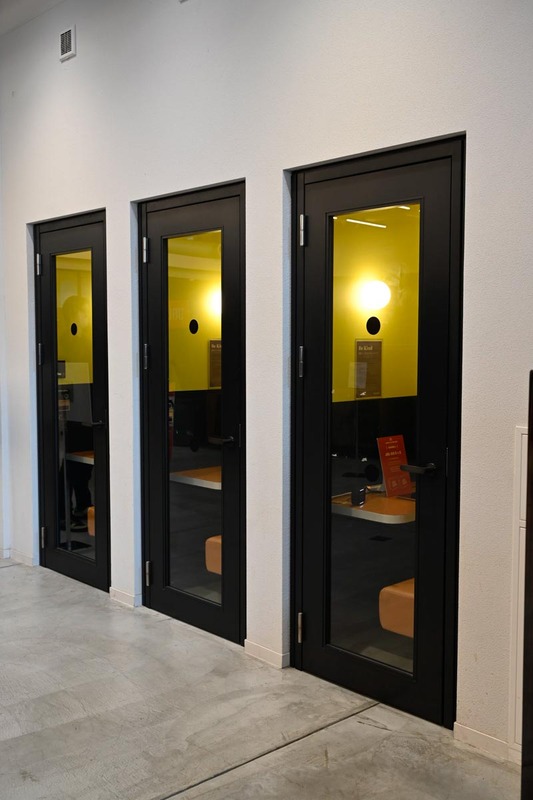
A dedicated room is also available where visitors can thoroughly experience the differences between headphones, mono playback, and stereo pair playback.
This event, commemorating JBL's 80th anniversary, is not merely an exhibition of past products. It is structured to allow visitors to experience JBL's journey through actual sound and products, showcasing how technology used in movie theaters, studios, and concert venues made its way into homes, and further evolved into Bluetooth, Wi-Fi, and streaming.
With legendary models gathered in Tokyo close to the 80th anniversary of its founding, alongside the new COVE products for the streaming era, this event highlights how JBL has transformed the way it delivers music, from professional audio to home listening environments. This continuity can be experienced all at once, making it an event to watch!

A Land Cruiser equipped with a JBL sound system.
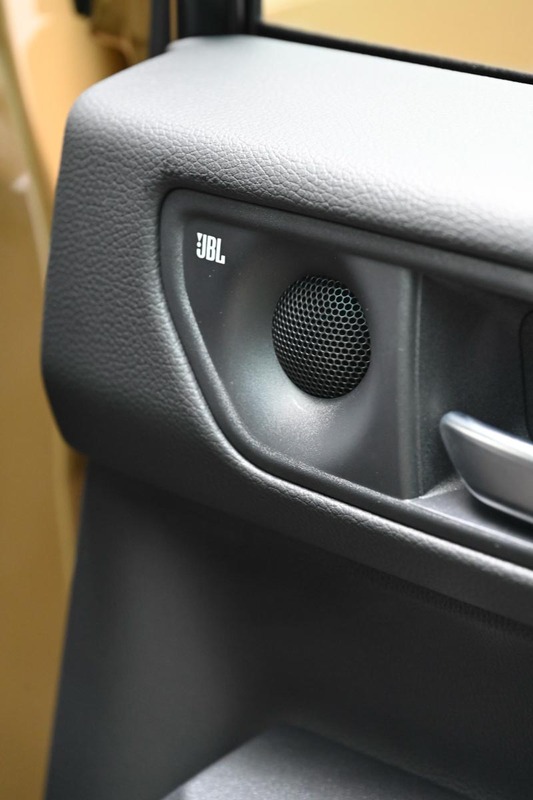
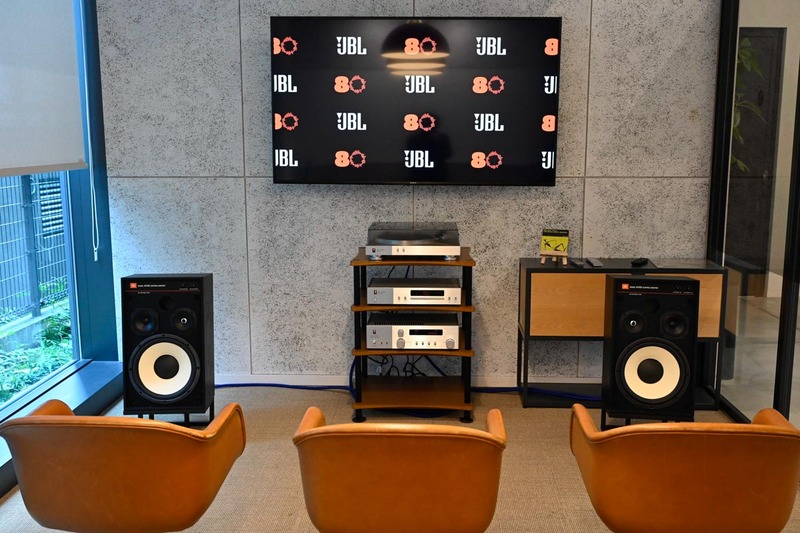
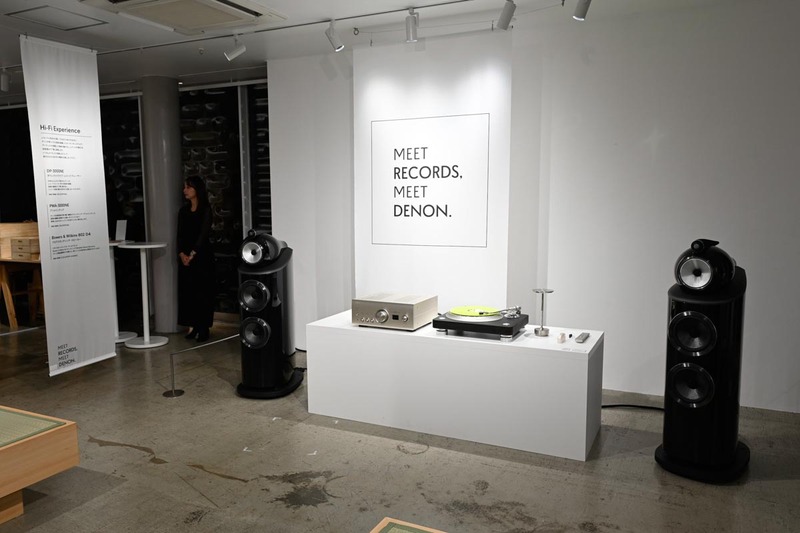
Visitors can also immerse themselves in the world of Hi-Fi audio.
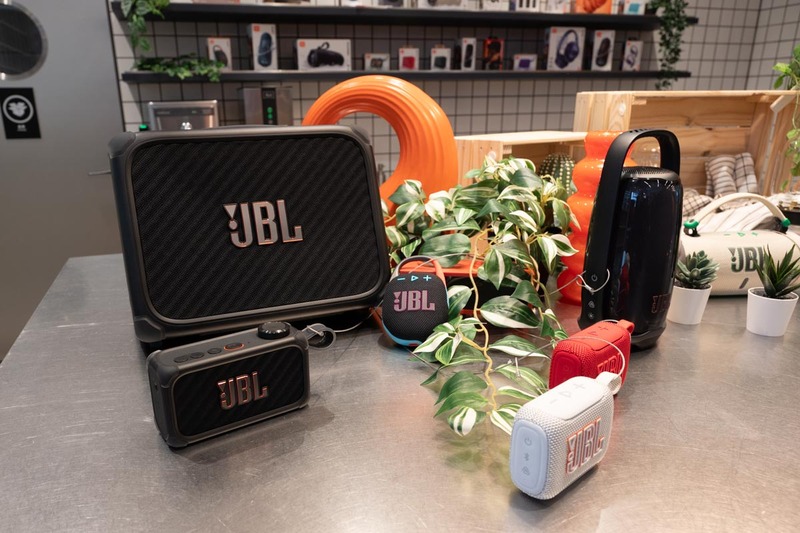
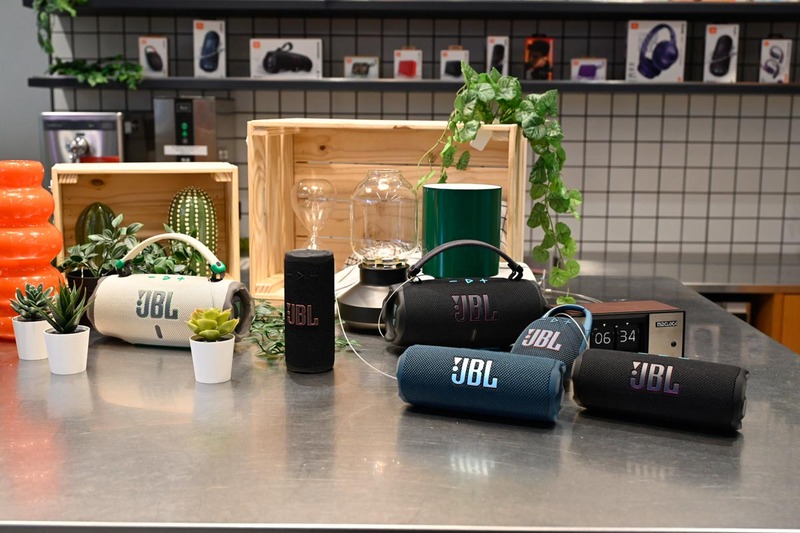
Of course, current Bluetooth speakers are also on display.
"JBL 80 YEARS POWERING VOICES in TOKYO" Event Overview
Date and Time: October 3, 2026 (Sat) 11:00 AM – 8:00 PM, October 4, 2026 (Sun) 10:00 AM – 5:00 PM Venue: WeWork Iceberg (6-12-18 Jingumae, Shibuya-ku, Tokyo) Admission: Free The venue will feature the Playback Gallery, BYOR, Live Listening Session, listening and experience zones for the latest products, and more. Event details are available on the official JBL website.