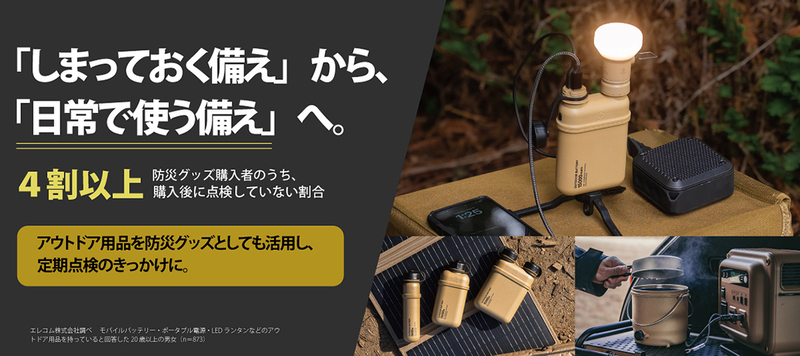
Elecom has announced the results of its "Outdoor Gear Disaster Preparedness Use Survey," conducted from August 19 to August 22. The survey revealed that 44% of people who purchased emergency supplies have either never checked them or checked them only once after purchase. In conjunction, the company also proposed utilizing its outdoor brand "NESTOUT" series as an option for disaster preparedness.
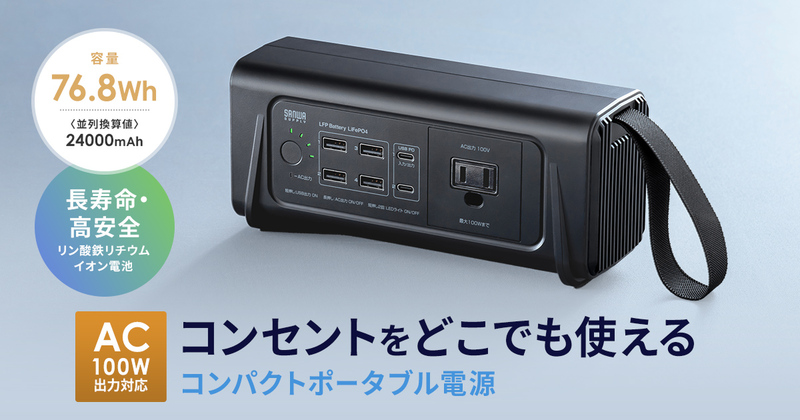
NESTOUT is an outdoor brand developed by Japanese manufacturer Elecom, primarily consisting of portable power stations, mobile batteries, and LED lanterns. Sales are conducted through the Elecom Direct Shop Main Store, Elecom Direct Shop Rakuten Store, and Amazon sales pages. A product list can be found on Elecom's official website NESTOUT category page.
The survey targeted 873 men and women aged 20 or older who own outdoor equipment such as mobile batteries, portable power stations, and LED lanterns. While 76% had experience purchasing emergency supplies, regarding post-purchase checks, 28% had "never checked" and 16% had "checked only once," totaling 44% who were effectively in a "just bought it" state. Even as disaster preparedness is emphasized, the current situation shows that regular post-purchase inspections have not become a common practice.
The most common reason for not continuing checks or inspections was "no opportunity to use them, so they get put off" at 36.8%, followed by "inspections and management are troublesome" at 27.7%, and "forgetting where they are stored" at 23.4%. Emergency supplies are not a "set it and forget it" item; daily management, such as knowing their storage location and checking expiration dates, is essential. Therefore, the idea of integrating regularly used outdoor equipment into disaster preparedness is gaining attention, as it naturally increases opportunities for inspection.
Furthermore, among those who use outdoor equipment several times a month or more for camping, car camping, or other outdoor leisure activities, the percentage who regularly inspect and use their emergency supplies reached 76.1%. Outdoor activities, which allow people to experience environments with limited electricity and water, can also serve as practice grounds for emergencies.