On November 9, Felix Rieseberg, a developer at Anthropic, reported on X that he had instructed the company's AI model, "Claude Fable 5.2," with a single prompt to create "Saltline," a browser-playable first-person shooter. The development took approximately 8 hours and cost about $550 in API fees.
I wanted to test Fable 5.2's quality with one-shot prompts without human feedback. Everything in this game is from scratch: models, sounds, textures. ~$550 at API pricing, ~2.7M output and 445M input tokens, heavily cached. Took 8 hours! Play it here: https://t.co/fazOCcyNIH https://t.co/GoCitQ9EVe — Felix Rieseberg (@felixrieseberg) November 9, 2026
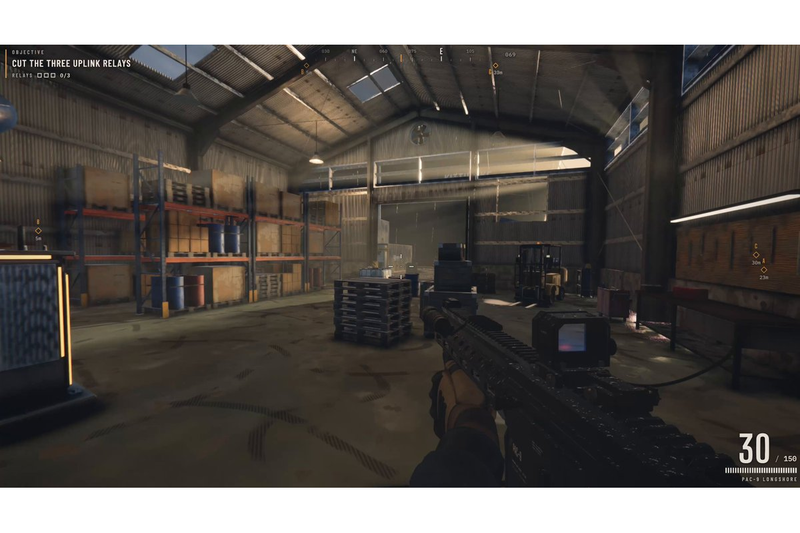
The game is set in a rain-soaked container port. Players battle drones and quadrupedal robots while disabling three communication relays. A roughly 72-second gameplay video shows the player advancing through the port, lined with containers and warehouses, gun in hand, with lights reflecting off the wet ground.
According to Rieseberg, no 3D models or image files were prepared for the game. The shapes of objects, surface textures, and lighting were defined using mathematical formulas, and sound effects were also generated by code. Even the corrugated metal surfaces of the containers are represented by mathematical waveforms.
Instead of loading images and audio separately, the browser executes code to generate the port's scenery and sounds. This mechanism keeps the overall size small, and despite its appearance reminiscent of a major title, the entire game fits into a single HTML file of approximately 1.4MB.
The current public version includes weapon models, sounds, and game progression adjustments that Rieseberg added over approximately two hours after the initial generation. The initial version, prior to these additional adjustments, is also available via a separate link.
On GitHub, the repository where the standalone version was published saw a flurry of forks, allowing other developers to duplicate and modify the code. Derivative development from the original game is progressing, with resources being released that allow users to examine how game shapes and sound effects are created using 3D viewers and audition features.