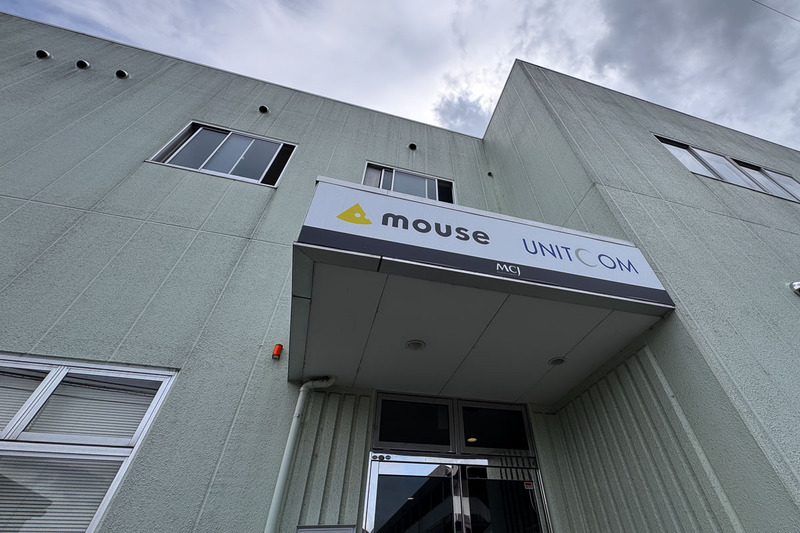
Kasukabe City, Saitama Prefecture – For Mouse Computer Co., Ltd., known as a BTO PC manufacturer, this location holds special significance, etched with the history of its founding. The "Saitama Service Center," relocated and expanded to its current site in 2013, serves as the company's core after-sales support hub for Eastern Japan.
Traditionally, the role of a service center primarily revolved around the singular function of repairing and returning faulty products. However, the current Saitama Service Center is evolving beyond the confines of a mere repair factory. It has become a "comprehensive hub" where diverse after-sales support functions are consolidated, including a contact center for customer inquiries, a feedback mechanism for quality control and development based on repair data analysis, logistics and inventory management for tens of thousands of parts, and the re-servicing function for "Refurbished PCs (Mouse Certified Refurbished PCs)," a focus in recent years.
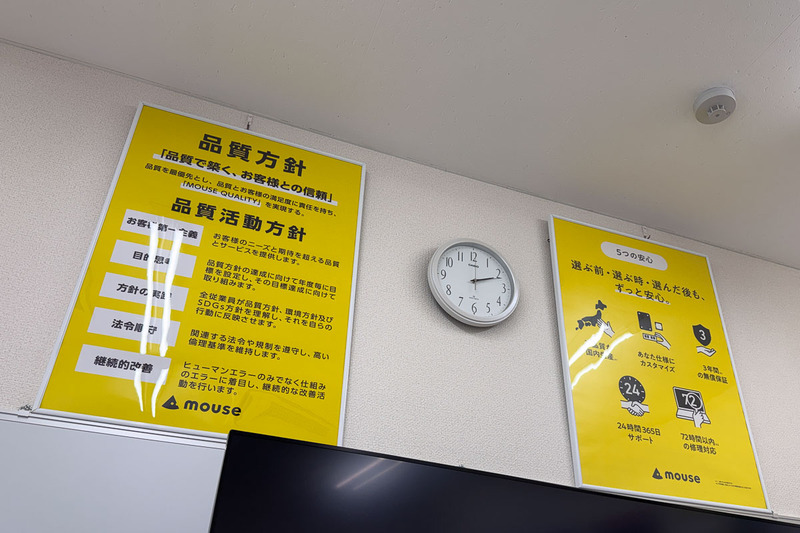
The conference room displayed Mouse Computer's policy on support.
Among the company's four service centers nationwide, the Saitama Service Center broadly covers the Eastern Japan area. Of the approximately 45,000 support cases handled company-wide annually, over 60% are concentrated in Saitama. Beyond assisting general users, it also acts as a control tower for the company's after-sales service, handling complex repair cases requiring advanced technical skills and providing support for specific corporate clients.
In-House Operations (Insourcing) Enable Responsiveness and a Quality Improvement Loop
Generally speaking, it's not uncommon for manufacturers to outsource after-sales support and repair operations to external companies. However, Mouse Computer maintains a style of conducting almost all processes in-house, from customer service to product repair and data analysis. Let's break down the intentions and benefits of this approach into several key points.
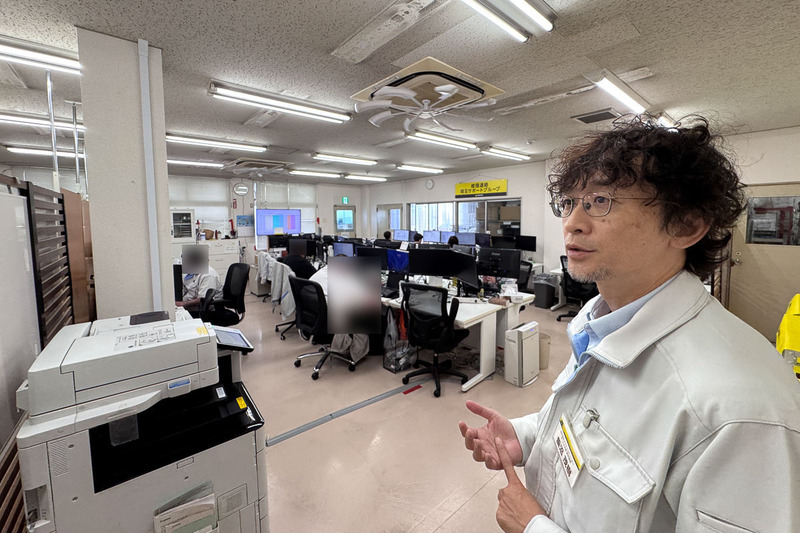
Shigeki Iinuma, General Manager of the Service Division, who responded to our interview.
Unified Database Eliminates Information Silos
The greatest strength of in-house operations lies in the speed and transparency of information sharing between departments. Symptoms of malfunctions and usage environments reported by customers to the contact center are immediately registered in a proprietary, internally developed common database. When an actual device arrives at the Saitama Service Center, it is linked to its history in this database, allowing technicians to begin diagnosis and repair with a complete understanding of past interactions. There are no information transmission delays or contractual restrictions that often arise with external outsourcing; instead, a system is in place to guide solutions in the fewest possible steps through rapid collaboration among internal staff.
Close Feedback to Development and Quality Control Departments
The repair data collected daily at the Saitama Service Center is not just used to fix the PC at hand. The center also houses a department specializing in technology and data analysis, which meticulously analyzes the causes of reported malfunctions. These findings are fed back into new product designs through collaborative meetings held twice a week with the development and quality control departments. Furthermore, if defect trends are identified at the component level, data is shared with suppliers and ODM partners, leading to improvements in part quality and prevention of issues in next-generation models.
In-House Certification System Supporting Technical Skill Transfer
In the rapidly evolving PC industry, enhancing the skills of on-site staff is essential. The Saitama Service Center implements its own "Divisional Certification System (internal qualification)" for troubleshooting and product technology. This system is integrated into the evaluation process, functioning as a mechanism to continuously update the latest product knowledge and techniques. In an environment with staff ranging from young recruits to veterans, years of expertise are systematically passed down.
Repair Process Focused on Each Unit and User-Centric Attention to Detail
The interior of the service center is functionally zoned into areas for inbound/outbound shipments, diagnosis/repair, and strict parts management. The process, designed to safely and quickly return received products to users, incorporates numerous ingenious solutions.
Repair Flow Integrating Systems and Expert Skills
The repair process at the Saitama Service Center largely proceeds in the following steps. Furthermore, the floor layout is designed for a smooth, clockwise flow of products from inbound to outbound, minimizing unnecessary movement time.
Inbound/Sorting: Deliveries arriving by truck between 9 AM and 10 AM are unboxed and condition-checked in the morning, completing inbound registration. Initial sorting based on priority is also performed here. *Diagnosis/Root Cause Identification: Products are divided into laptop zones and desktop PC/monitor zones. After testing to reproduce the symptoms, technicians attempt to identify the faulty component. *User Communication: Based on the diagnosis, users are contacted regarding warranty applicability and estimated costs, and approval for proceeding with the work is obtained. *Part Replacement/Internal Cleaning:* After approval, faulty parts are replaced. Simple internal cleaning using an air duster is also performed in a dedicated booth.
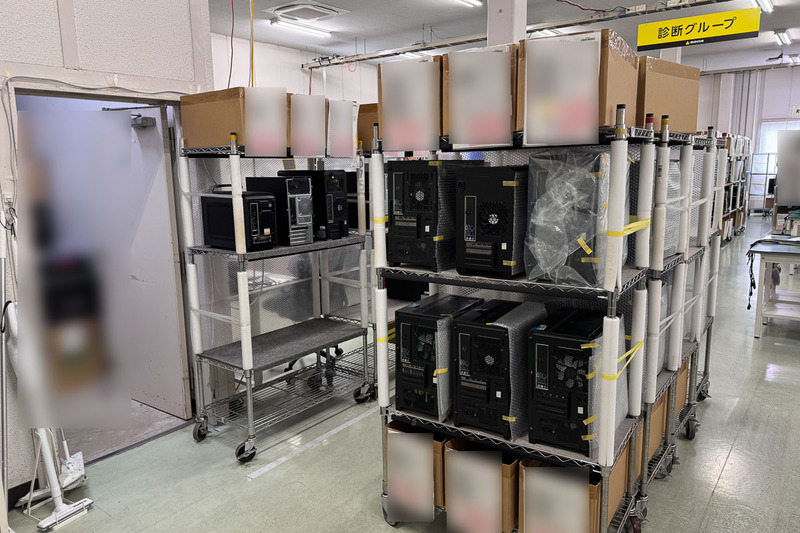
PCs sent by users, lined up for trouble verification and diagnosis.
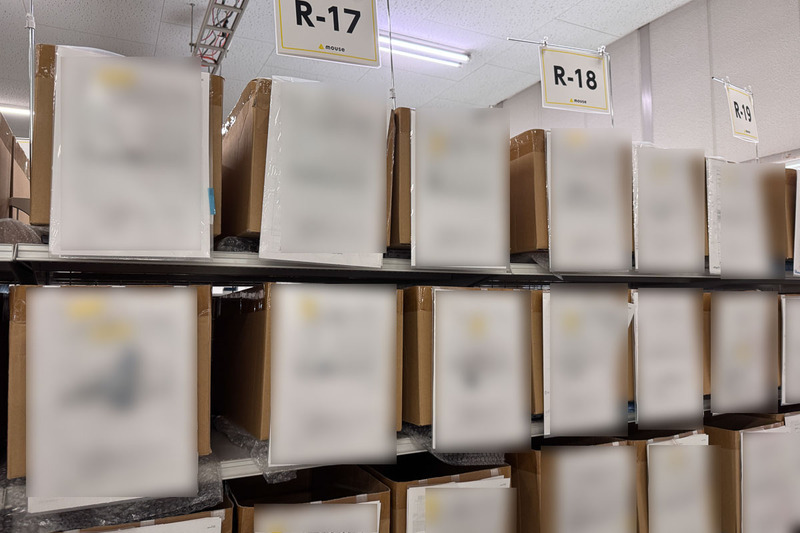
Received PCs are managed and handled as sets. If a depleted battery or similar is identified, it may be removed beforehand and noted.
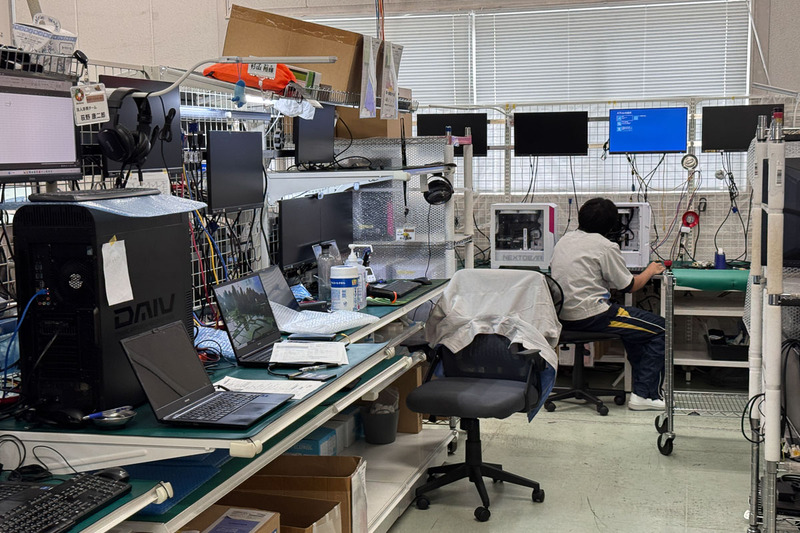
The diagnosis group performs detailed checks to identify the root cause.
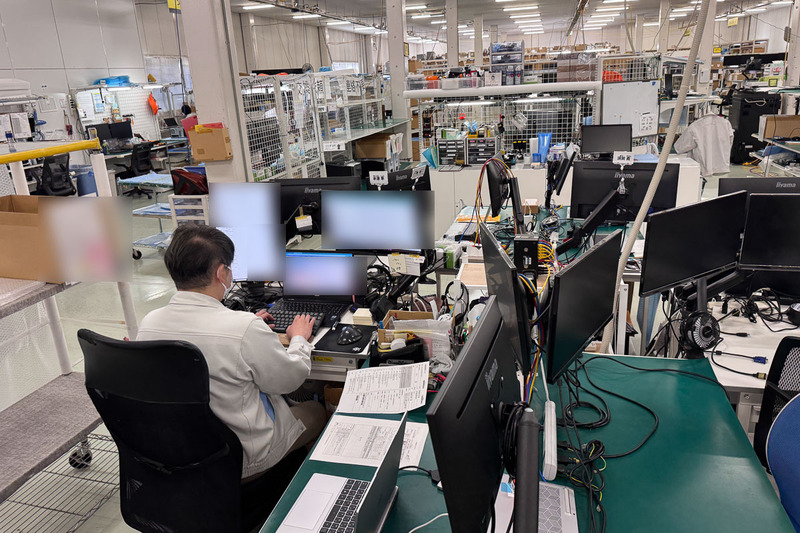
Not only are current issues resolved, but by accumulating information on problems and their solutions, future responses and quality improvements can be achieved.
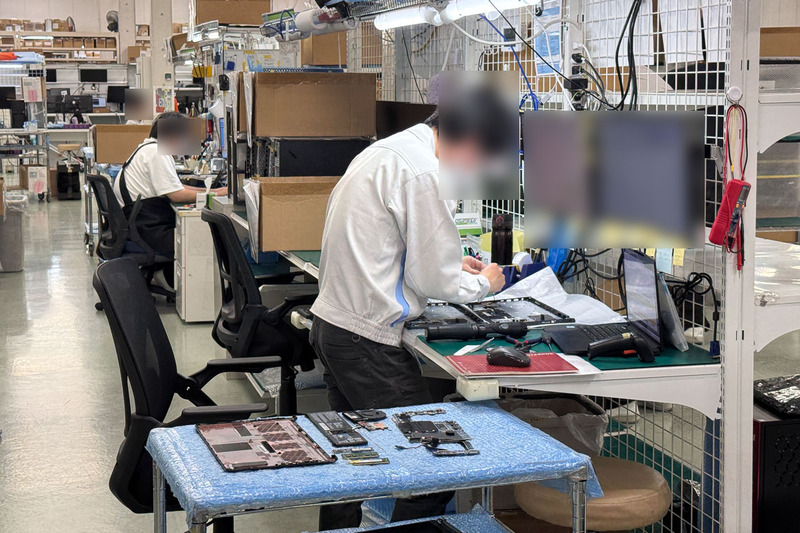
The process of specifically addressing issues, such as part replacement.
QC (Quality Check):* Performs operational verification tests, confirms normal OS operation, and makes the final determination for shipment eligibility.
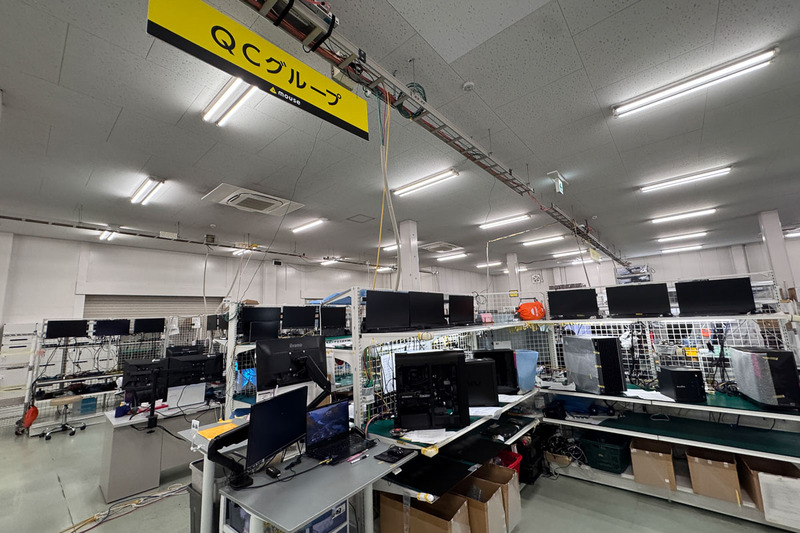
Exterior of the QC (Quality Control) group.
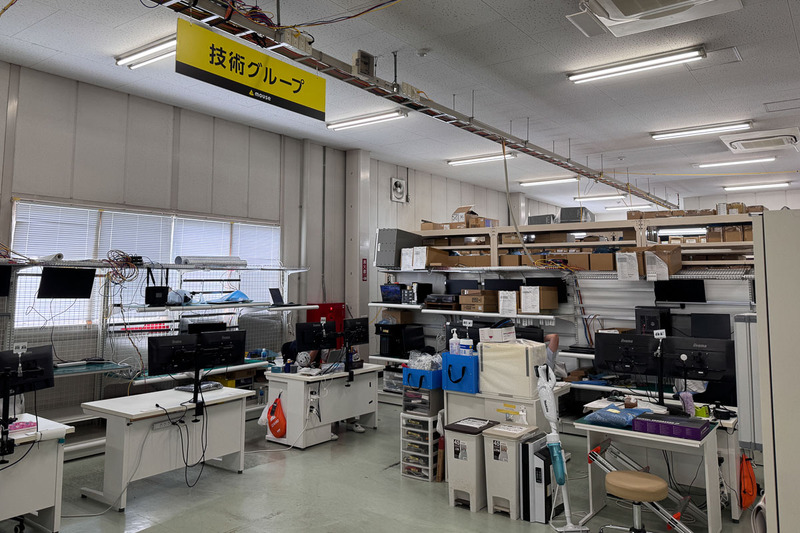
Exterior of the Technical group.
Shipment:* Products that pass the final check are carefully packaged and dispatched to the user.
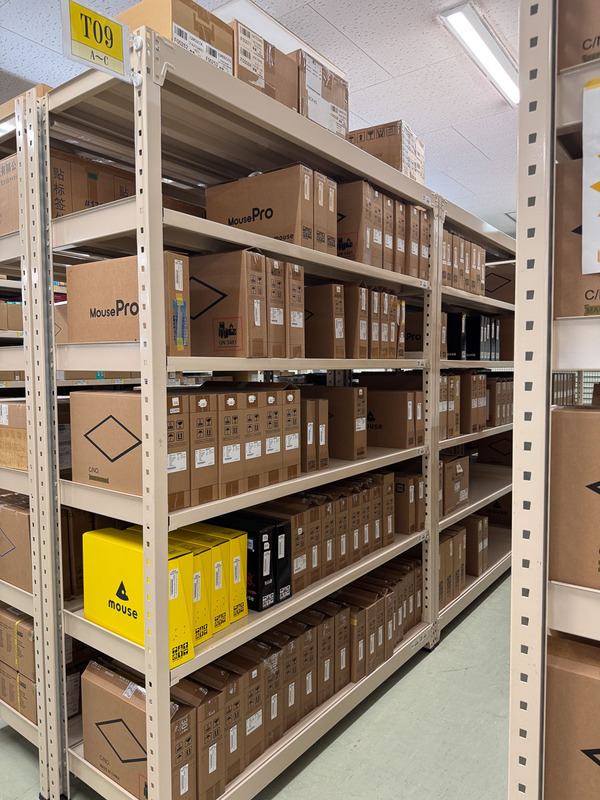
PC packaged before return shipment.
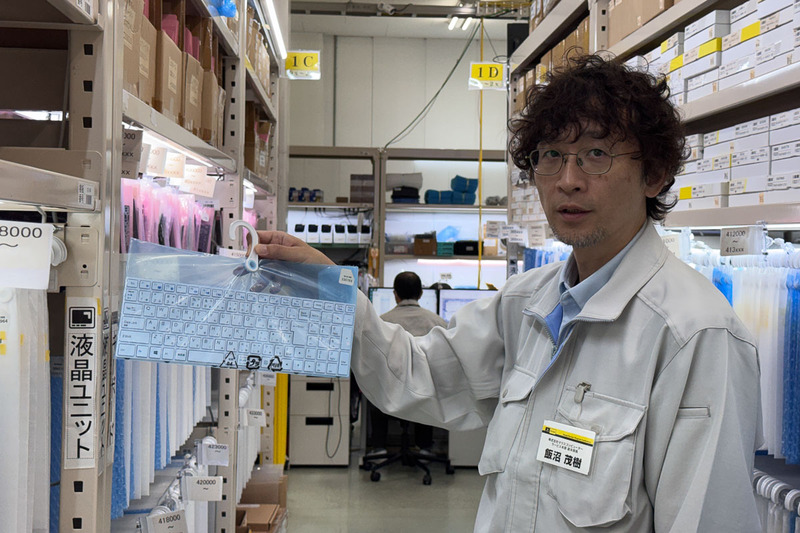
Mr. Iinuma holding a keyboard stocked as a replacement part.
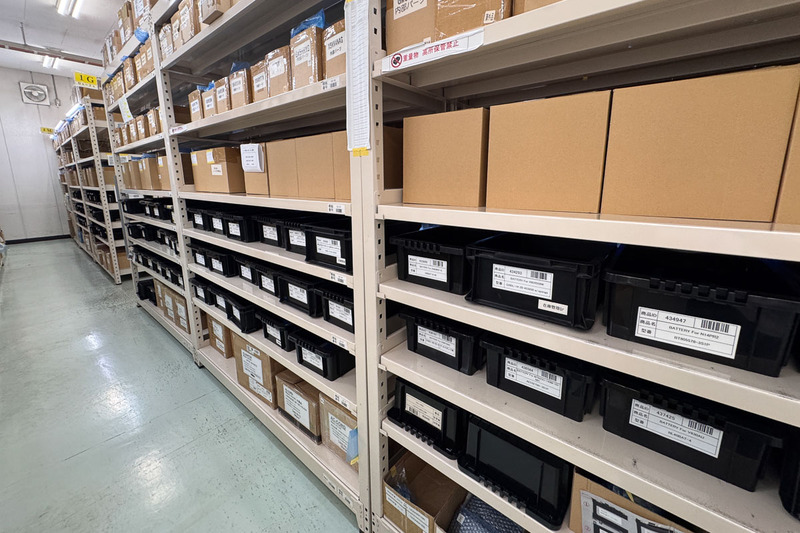
A vast number of parts used in past products are stocked.
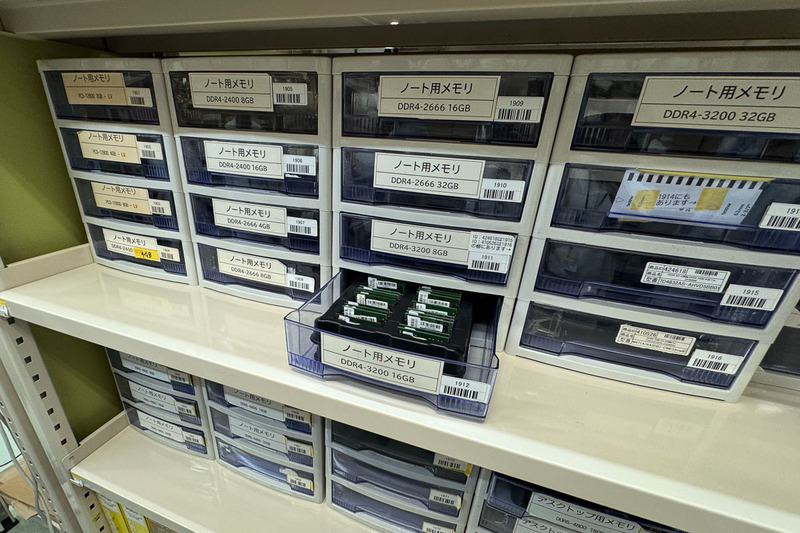
Laptop memory with various specifications available.
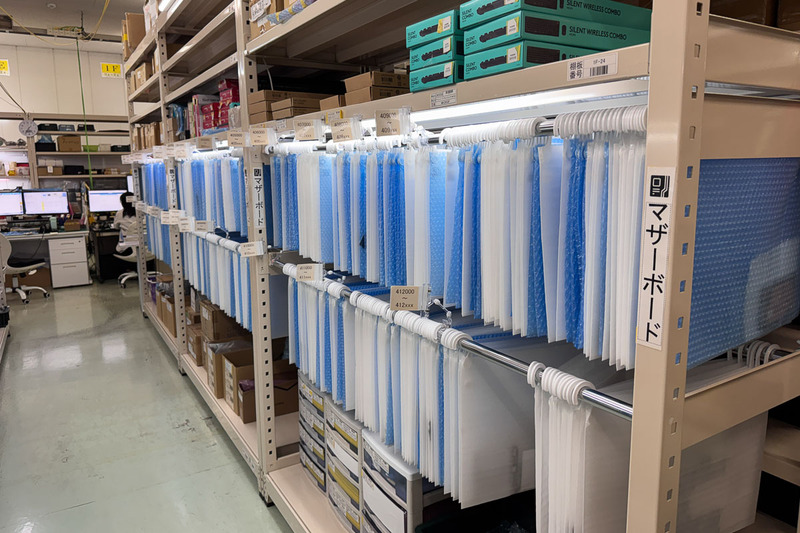
Motherboards were managed in packaging materials like this.
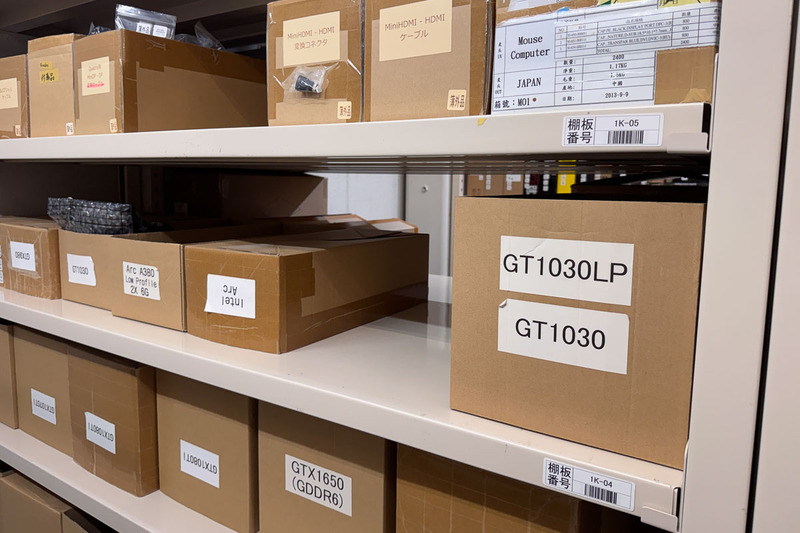
Video card inventory, with nostalgic model numbers lined up.
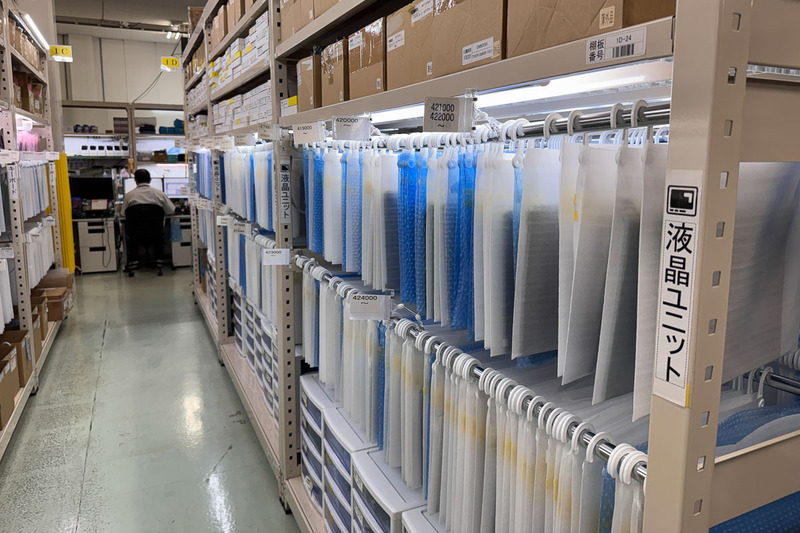
There was also a considerable variety of LCD panels, categorized by model.
Difficulty of Diagnosis and High-Level Support for Gaming PCs
"Diagnosis" is where advanced expertise is required in the repair process. Many incoming products present "symptoms not reproducible" on-site, meaning the reported issues cannot be replicated.
A particular challenge in recent inquiries is "troubleshooting gaming PC issues." This is because the causes of malfunctions are diverse, ranging from hardware failures to game client data, network environments, game company server outages, and driver issues, making it difficult to isolate the problem. Even when there's no hardware issue, technicians must investigate and explain phenomena occurring in the user's environment.
While issues unrelated to hardware fall outside Mouse Computer's direct responsibility, the site provides verification environments and conducts comparative tests to identify causes, aiming to help users resolve problems and provide accurate support.
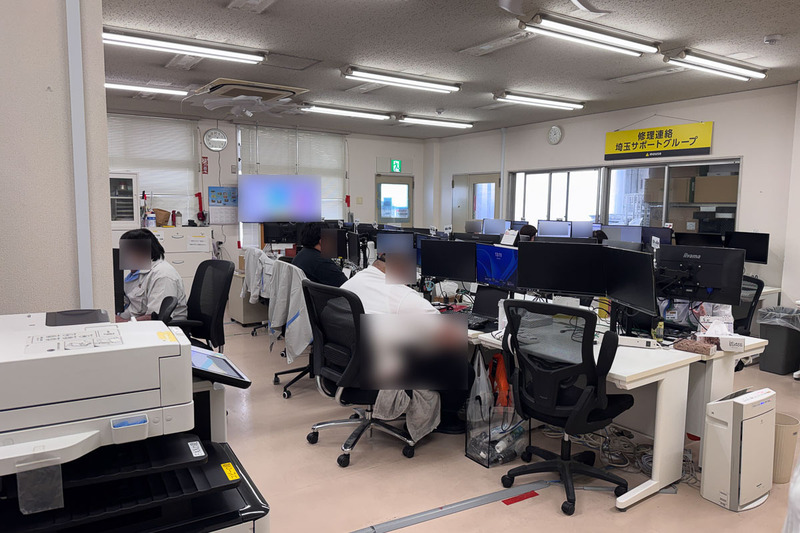
Support group handling user inquiries.
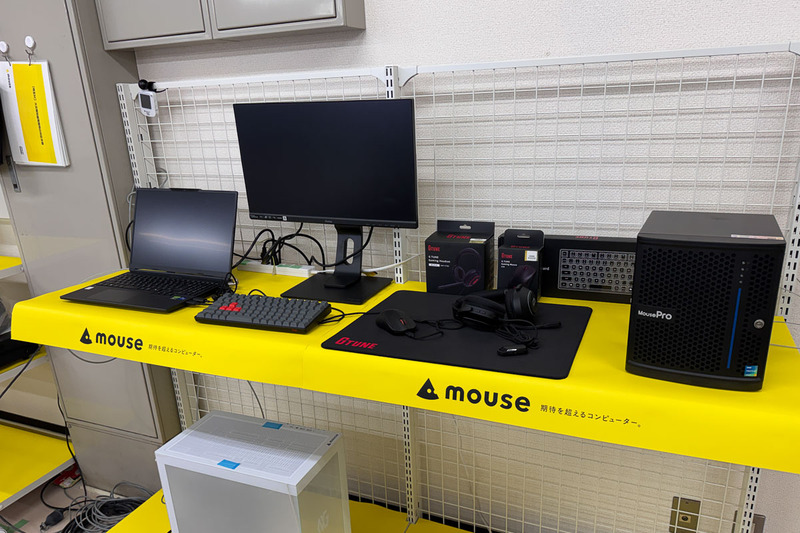
In one corner, actual devices are lined up, allowing for operational checks on real hardware in case of malfunctions or issues.
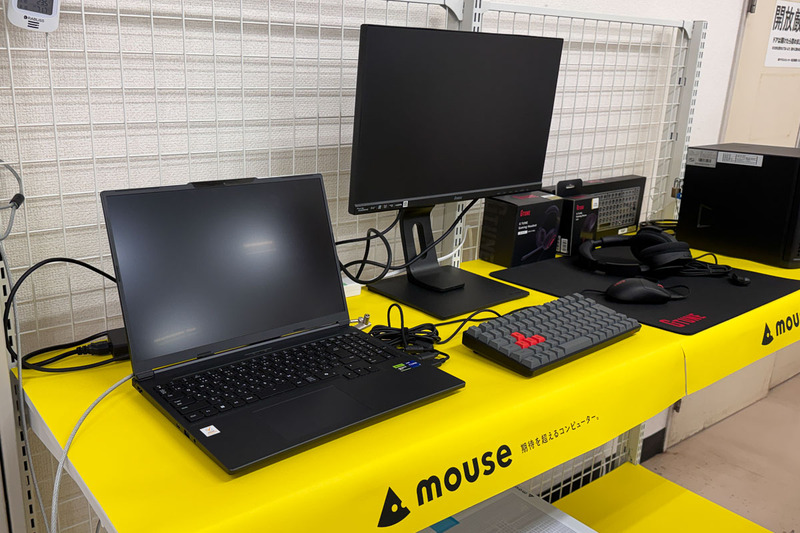
Various types of products, including gaming laptops, are displayed.
The Obsession with "72-Hour Repair" and Proactive Maintenance
The company continues to uphold the goal of "repair completion within 72 hours (from arrival at the center to shipment)" as a service quality indicator. While recent performance may occasionally exceed the average of 72 hours due to seasonal demand fluctuations, the company remains committed to improving speed without abandoning this target.
Another noteworthy point is the practice of "preventive maintenance," which goes beyond repairing only the reported issues.
A prime example is the full voltage check of button batteries (CMOS batteries) on motherboards. Even without a user report, the company proactively checks these, and if a voltage drop is confirmed (within the warranty period), they attempt to replace it with a new one. For keyboard and battery degradation, they check the entire product before considering the optimal course of action.
The company believes that such attention to "invisible" details is crucial for earning user trust.
Changes in Market Environment and the Rise of Users Who "Repair and Use for Longer"
In recent years, the price of PC main units has sharply increased due to global rises in component prices and the depreciation of the yen. Among users, there's a growing trend to choose the option of "repairing and using for longer" rather than just "replacing." Indeed, the number of repairs received at the Saitama Service Center has been increasing alongside sales growth, and with the widespread adoption of 3-year warranties, the proportion of free repairs within the warranty period is also rising.
Furthermore, the demand for "on-site repair (on-location visit repair)" to handle large-scale corporate deployments and individual urgent troubles is expanding, and a dedicated team has been established within the center to strengthen this system.
Against this backdrop, Mouse Computer is actively promoting the use of AI in its support operations. Currently, the contact center employs a speech recognition system that transcribes customer calls in real-time, and the company aims to build an "AI-powered initial diagnosis and automatic fault identification system" by linking this transcribed audio data with its accumulated repair database.
By having AI assist in troubleshooting, which often relies on technician experience, the goal is to shorten diagnosis times and detect early signs of malfunctions. The company aims to further enhance quality and speed by integrating AI with human technical expertise.
The "Refurbished PC" Business Creating New Value
On the second floor of the Saitama Service Center, the "3R Promotion Office" this year officially launched its Refurbished PC (Mouse Certified Refurbished PC) business.
Let's briefly explain the background behind the launch of this business. Mouse Computer has its own factory in Iiyama City, Nagano Prefecture, where it has handled outlet PCs, such as "blemished items" and "previous-generation models."
However, in recent years, PC prices have risen sharply due to soaring component costs and the depreciation of the yen. Addressing the demand for affordable, high-quality PCs became a crucial challenge for the manufacturer. Furthermore, there was a need to strictly address issues like purchases made for resale purposes.
The idea that emerged was to establish a system for manufacturers to directly provide refurbished products, strictly managing and supplying them. The Saitama Service Center was chosen for this initiative. It consolidates Mouse Computer's repair expertise and a vast number of replacement parts. With all conditions met, a dedicated line was newly installed here, marking the starting point for elevating this into a genuine manufacturer-certified refurbishment business. Let's summarize its key points below.
Thorough Refurbishment Flow Spending 4-5 Hours Per Unit
The term "refurbished PC" has become increasingly common in recent years.
Mouse Computer's refurbished PCs are called "Mouse Certified Refurbished PCs." These differ in some aspects from typical used PCs. A major point is that the PC undergoes re-servicing before sale.
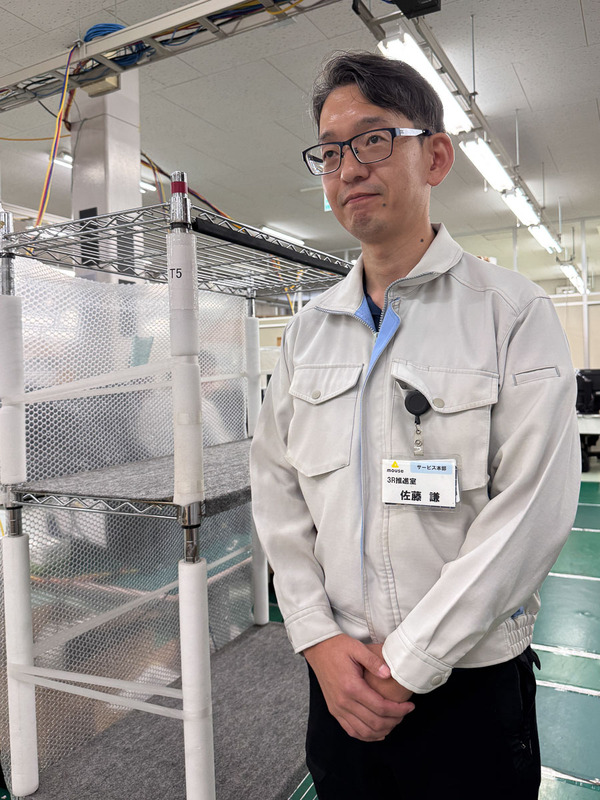
Ken Sato, Manager of the 3R Promotion Office, explaining Mouse Certified Refurbished PCs.
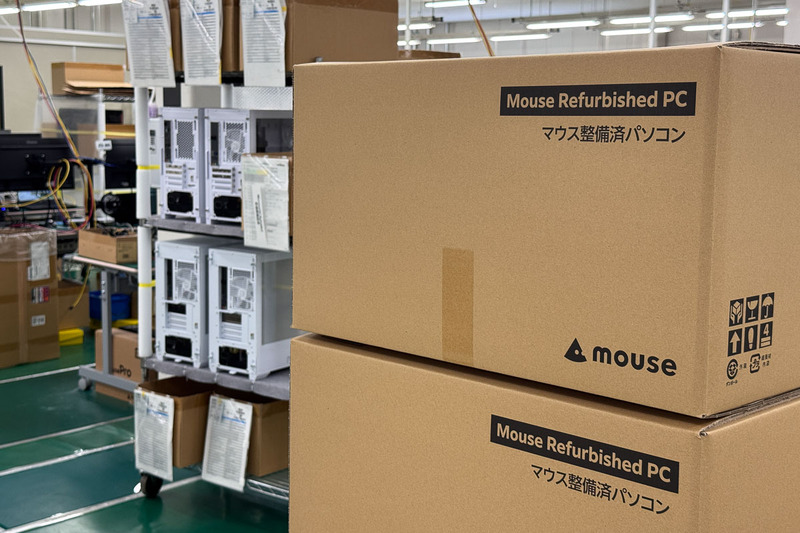
Mouse Certified Refurbished PC packaged before shipment.
When you hear "good condition used PC with manufacturer's endorsement," you might imagine something similar to a "certified pre-owned car." There are similarities and differences. A refurbished PC generally refers to a PC that has been collected (e.g., returns due to initial defects, store display models, or lease returns from businesses), cleaned, repaired, had parts replaced, and undergone operational checks before being re-shipped and sold. Unlike "used items" that are simply sold as-is after collection, refurbished PCs are characterized by being restored to near-new operational standards through a dedicated inspection process, offering a significantly higher level of operational reliability.
At the same time, they can be purchased for less than new products, making them an excellent cost-performance option.
For refurbished PCs, sometimes the manufacturer itself handles the servicing, as with Mouse Computer, while other times it's handled by used goods retailers or specialized companies. Naturally, there tend to be differences in quality control and warranty content.
In the case of manufacturer-reconditioned/serviced products, the PC manufacturer itself is responsible for the servicing, and the parts used for repair or replacement are fundamentally genuine. Some manufacturers may replace consumables like the exterior, keyboard, or battery with new parts, and a warranty similar to that of a new purchase is often provided.
On the other hand, for reconditioned/serviced products by distributors, servicing is handled by used goods retailers or recycling companies, and replacement parts may include not only genuine parts but also equivalent or compatible components. While cleaning is performed, replacing minor scratches or consumables can be difficult in some cases, and the warranty is unique to the retailer, though prices may be lower as a result.
It should be noted that a typical "used PC" undergoes operational checks and cleaning, but is essentially sold as-is from its previous user. It may be displayed with explicitly stated defects or missing accessories. "Blemished items" can be thought of as similar to outlet products, which are resold items that were returned or exchanged due to damaged packaging during shipment.
Thus, a characteristic of manufacturer-handled refurbished products is the strictness of their quality standards.
4-Tier Exterior Grading System and "1-Year Manufacturer's Warranty"
In Mouse Computer's case, store display models and returned products are gathered in the 3R PC area of the Saitama Service Center, where each unit undergoes 4 to 5 hours of operational diagnostic testing equivalent to that of a new product. During re-servicing, the usage history and wear level of parts are quantified. For example, if an SSD's power-on time or write capacity exceeds a specified value, or if battery capacity falls below a certain standard, it is replaced with a new part. After cleaning, OS reinstallation, and packaging in dedicated cardboard boxes, the product is shipped.
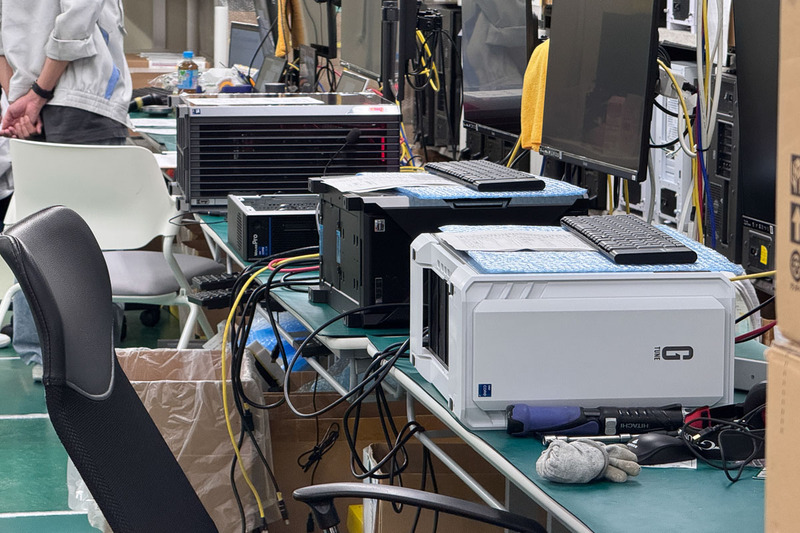
PC undergoing servicing work.
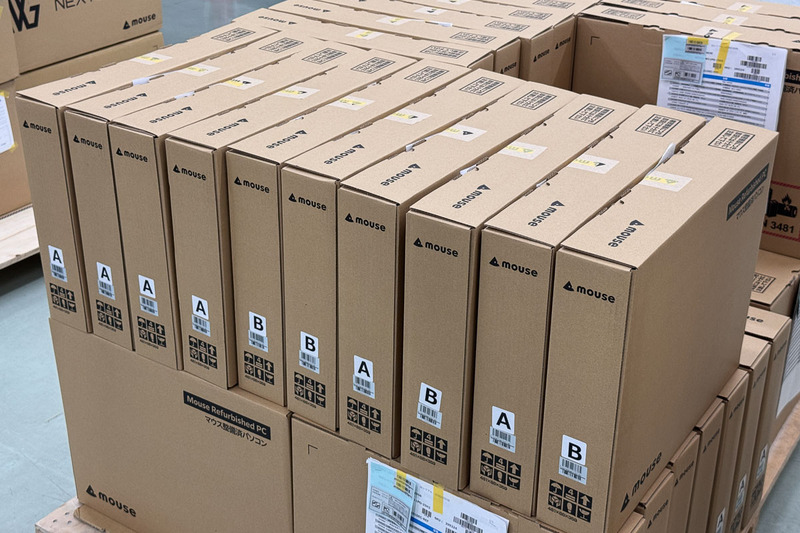
The letters "A" and "B" on the box indicate the product's exterior rank.
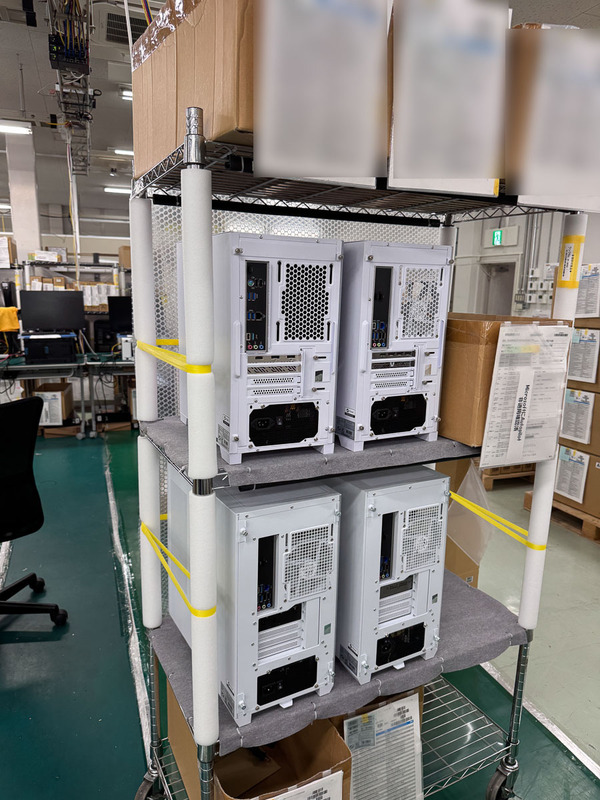
The photo shows an A-rank product (minor scratches), but it was so beautiful that it would feel natural to call it new. Furthermore, S-rank products are said to be almost indistinguishable from new, so finding one would be lucky.
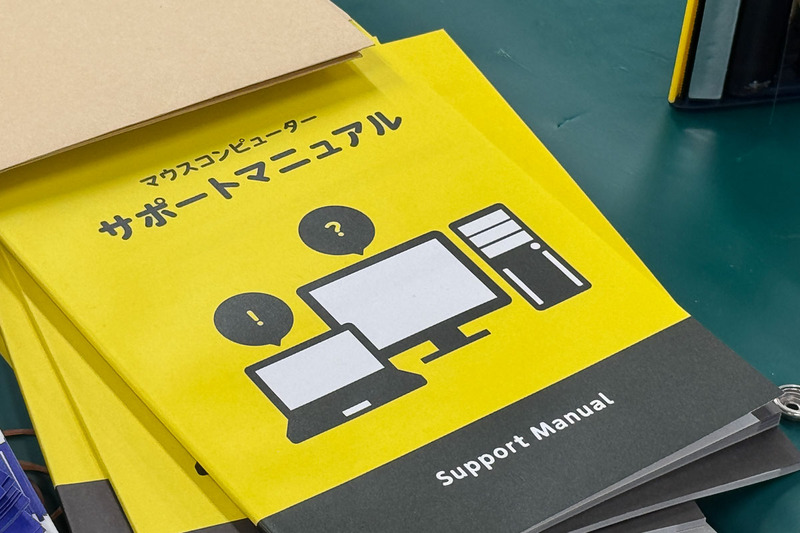
It arrives to the user with a dedicated model number and support manual. A warranty is also included.
Instead of replacing all exterior parts with new ones, products are ranked into four grades—S, A, B, and C—according to their condition before shipment. While scratches and other imperfections are clearly indicated by the rank and reflected in the price, the company guarantees "internal part configuration and operational quality equivalent to new products."
Incidentally, S-class is equivalent to new, and A-class has only truly inconspicuous minor scratches, making it difficult to notice any issues even upon close inspection. B-rank can be considered a beautiful used item. This pricing strategy, based on exterior rank, provides users with a sustainable option to acquire near-new peace of mind at an affordable price.
Products come with a "1-year manufacturer's warranty," allowing users to receive the same support in case of failure as they would with a new purchase. Serial numbers and model numbers are also centrally managed with dedicated refurbished identifiers (e.g., "REL" appended to the end).
Supporting the quality and speed of the service center is the vast "parts inventory management area." The Saitama Service Center reportedly stores 4,000 to 5,000 types and 100,000 to 200,000 support parts at all times.
Since the company offers up to a 5-year warranty and continued support for some products, it maintains a wide range of components, from the latest parts to those for models shipped several years ago. Strict location management using digital technology ensures that part searches and outgoing processes are recorded in real-time. High-value CPUs and graphics cards are stored under strict key control, demonstrating thorough inventory management.
Mouse Certified Refurbished PCs, verified and re-serviced in this manner, can be inspected and purchased at 8 direct shops nationwide.
Reliable Quality Originating from Kasukabe
The Saitama Service Center continues to evolve not merely as a hub for repairing faulty PCs, but as a "hub of trust" that emphasizes users' ability to continue using their products with peace of mind after purchase.
Rapid data linkage through in-house operations, the sincerity of staff who attend to each unit, and new challenges like the refurbishment business and AI utilization. It makes sense that these are being cultivated in Kasukabe, the birthplace of Mouse Computer. We felt that this passion and expertise will continue to form the foundation supporting the company's "peace of mind and quality."
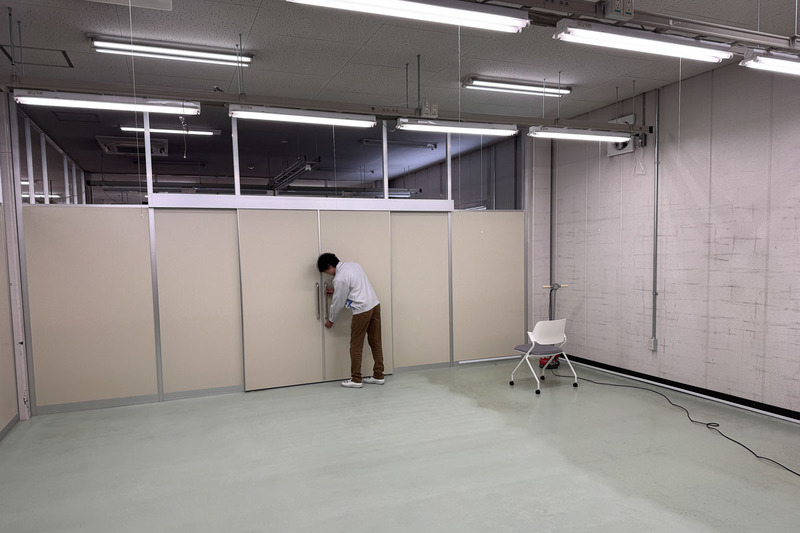
During the interview, we were also shown a corner prepared as a staging area.
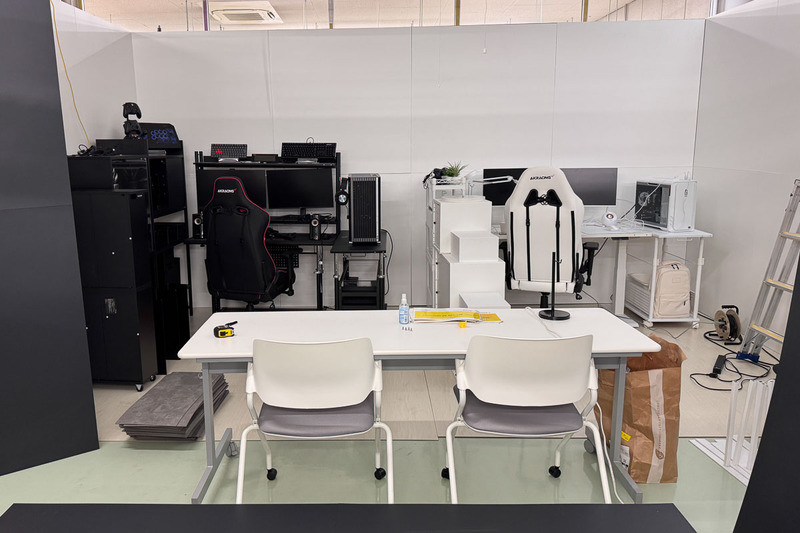
At the time of the interview, it was being prepared as a space for product photography and streaming.
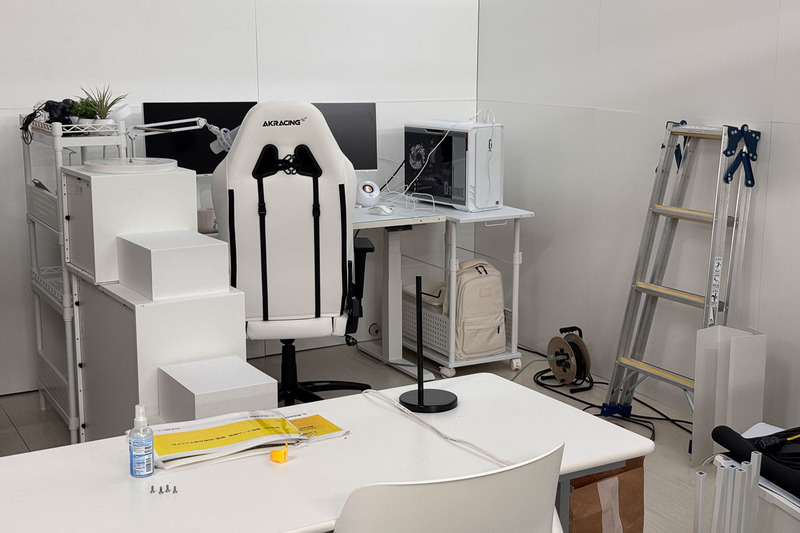
Information about Mouse Computer products might be disseminated from here in the future.