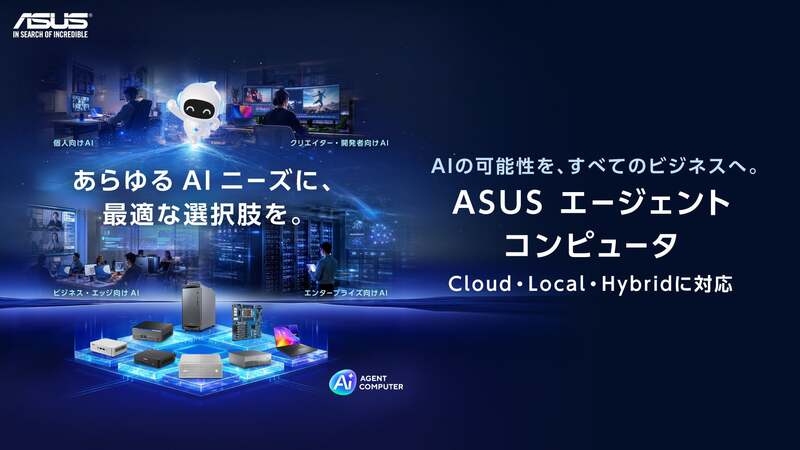
ASUS Japan announced on November 26th the expansion of its "ASUS Agent Computer" initiative, which proposes computing environments tailored to AI usage goals and applications. A key feature is the ability to choose between local AI, cloud AI, and hybrid AI depending on the application, broadly supporting everything from individual AI utilization to corporate implementation and operation.
"ASUS Agent Computer" is an initiative that proposes the concept of selecting the optimal PC configuration based on AI usage goals and required processing performance. It easily accommodates varying requirements for GPU performance, VRAM, and system memory across different applications, such as generative AI for text and image creation, personal AI assistants, programming, content creation, and business automation via AI agents. ASUS emphasizes that users can choose their AI execution environment while considering the balance between performance, data privacy, and operational costs.
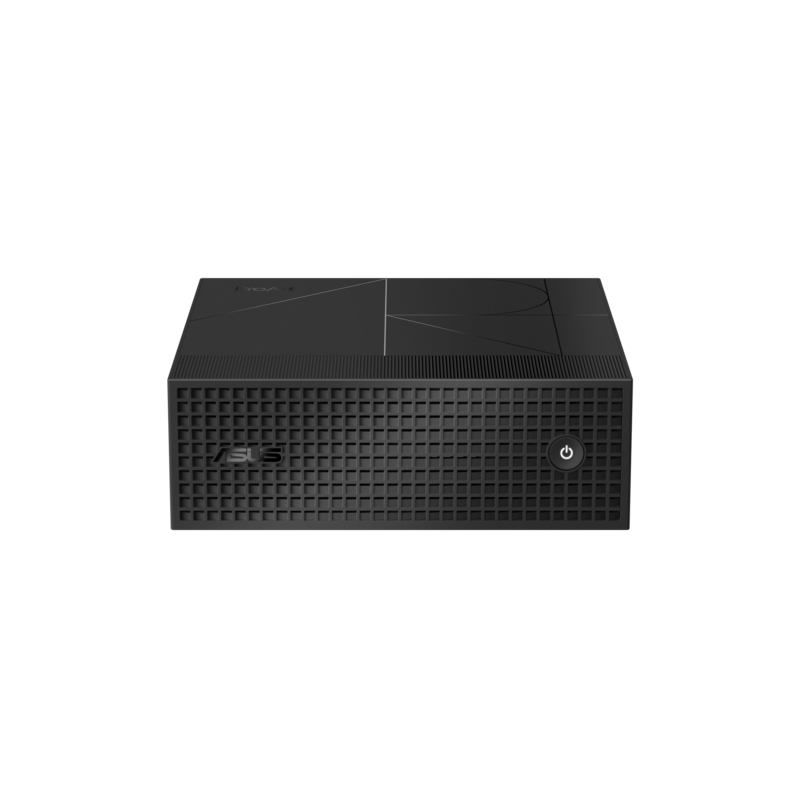
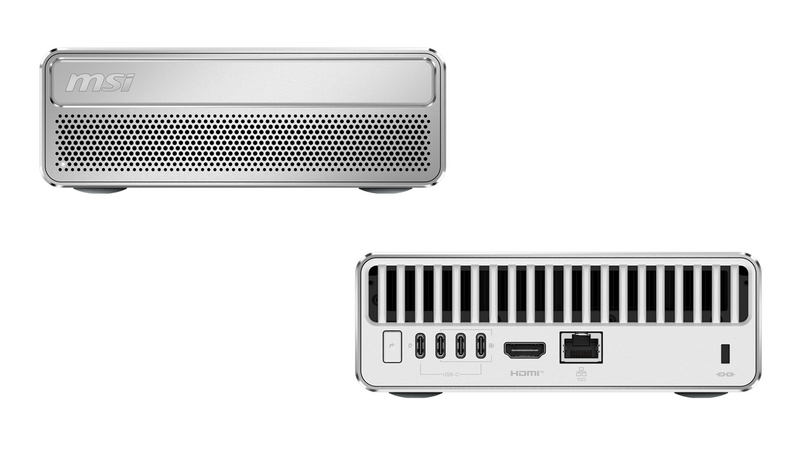
The supported hardware is also extensive. In addition to motherboards like PRIME, TUF Gaming, Republic of Gamers (ROG), and ProArt, it encompasses custom-built PCs, laptops, mini PCs, desktop PCs, workstations, and even enterprise-grade supercomputers leveraging GPUs such as NVIDIA GeForce RTX, AMD Radeon, and Intel Arc Pro. A dedicated website guides users to recommended hardware based on their AI usage goals and desired execution environment.
On the software front, ASUS is also advancing initiatives to make local AI and AI agents easier to use. These include "ASUS Zenni Claw" to support Agentic AI utilization on consumer devices, "ASUS Multi-LM Tuner" to assist with the deployment of optimized large language models, and "ASUS DisplayWidget Center" to connect ASUS monitors with AI agent workflows. Furthermore, for corporate clients, ASUS aims to optimize TCO (Total Cost of Ownership) and TCOP (Total Cost of Operation) – crucial factors when transitioning from pilot programs to full-scale deployment – thereby fostering the foundation for long-term AI utilization.